>_Programming Partner
Loading technical insights...
Loading technical insights...
Software Developer
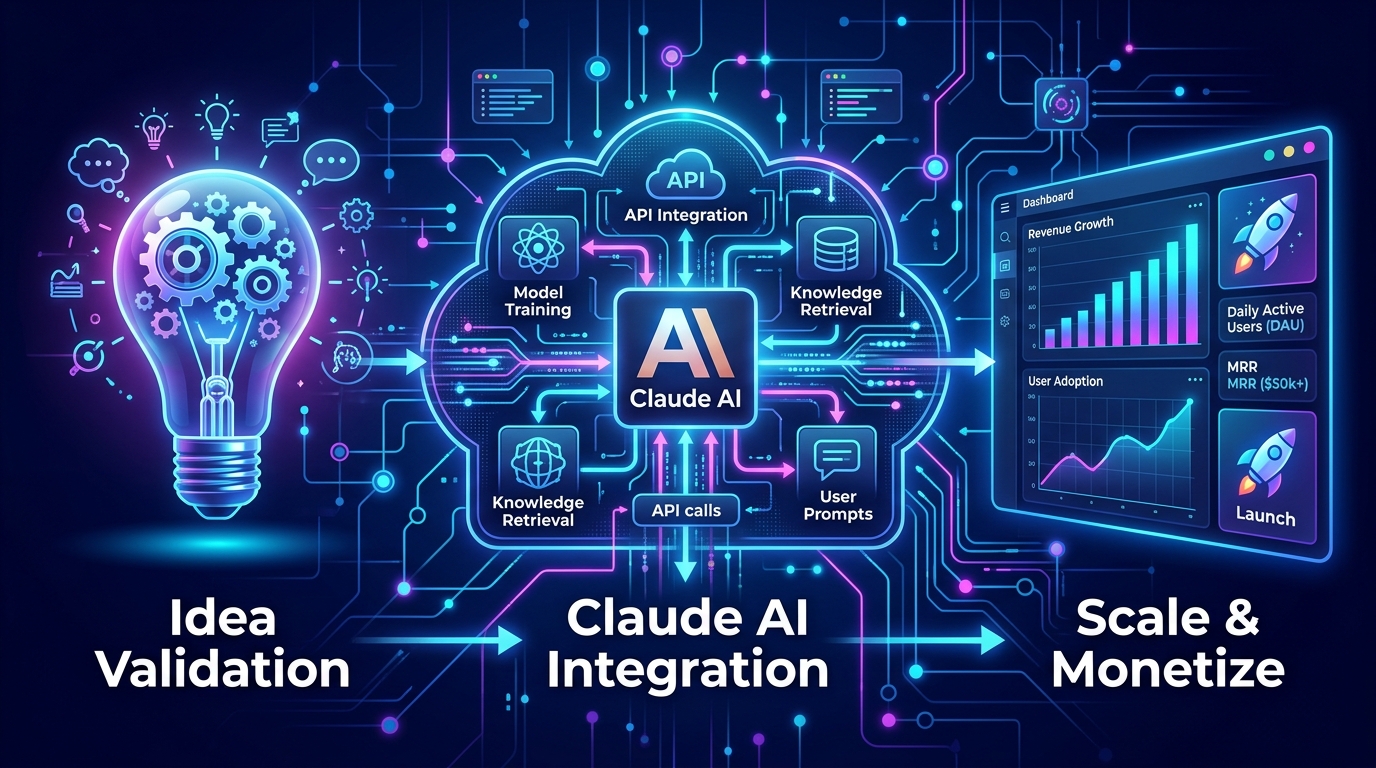
The landscape of software as a service (SaaS) is rapidly evolving, with artificial intelligence (AI) at its forefront. AI-powered SaaS products are transforming industries by automating complex tasks and providing intelligent insights. This shift creates immense opportunities for developers and entrepreneurs alike.
Among the powerful large language models (LLMs) available, Claude AI has emerged as a popular choice for building intelligent applications. Its advanced reasoning capabilities and robust API make it ideal for creating innovative solutions. This guide will walk you through the complete process of building an AI SaaS product with Claude AI.
We will cover everything from choosing a viable idea and designing the architecture to deploying and monetizing your AI-powered solution. By the end, you will have a clear roadmap to launch your next successful AI SaaS venture.
Claude AI, developed by Anthropic, offers a compelling set of strengths that make it an excellent foundation for SaaS products. Its strong reasoning abilities allow it to handle complex logical tasks and nuanced conversations. This makes it particularly effective for applications requiring deep understanding and sophisticated output.
A key advantage is Claude's exceptionally long context window, enabling it to process and remember vast amounts of information within a single interaction. This is crucial for document analysis, summarizing lengthy reports, or maintaining extended conversational threads. Claude also provides robust coding assistance, helping developers generate, debug, and understand code snippets.
Its document analysis capabilities are top-tier, making it suitable for tasks like contract review, research summarization, and knowledge extraction. Furthermore, Claude's robust API capabilities ensure seamless integration into existing and new applications, offering flexibility for developers. These features position Claude as a strong contender for business and developer-focused AI tools.
| Feature | Claude AI Advantage | Typical Other LLM (e.g., GPT-3.5) |
|---|---|---|
| Reasoning | Strong, nuanced, and safe reasoning | Good, but can be less consistent on complex logic |
| Context Window | Very long (e.g., 200K tokens), ideal for large documents | Shorter (e.g., 16K-128K tokens), can be limiting |
| Coding Assistance | Robust for generation, debugging, and explanation | Good, but may require more specific prompting |
| Document Analysis | Excellent for summarization, extraction, and Q&A | Good, but limited by context window size |
| API Robustness | Stable, well-documented, and developer-friendly | Generally stable, but features vary by model |
| Cost-Effectiveness | Competitive pricing for its capabilities and context | Varies, can be higher for similar performance tiers |
AI SaaS, or Artificial Intelligence Software as a Service, refers to cloud-based applications that integrate AI capabilities to deliver enhanced value. These products leverage AI to automate processes, provide intelligent insights, and interact with users more naturally. AI transforms traditional SaaS by adding layers of automation, natural language processing, and smart decision-making.
You likely use AI SaaS products daily without realizing it. Examples include grammar checkers like Grammarly, customer support chatbots, personalized recommendation engines on streaming platforms, and intelligent search functions in productivity tools. These applications demonstrate how AI enhances user experience and operational efficiency.
Claude AI's versatility makes it suitable for a wide range of AI SaaS applications. Here are some practical ideas, along with the problems they solve:
Successful SaaS products, especially those powered by AI, always solve a specific, tangible business or user problem. Simply adding AI for its own sake rarely leads to success. Focus on identifying a genuine pain point that your AI solution can effectively address.
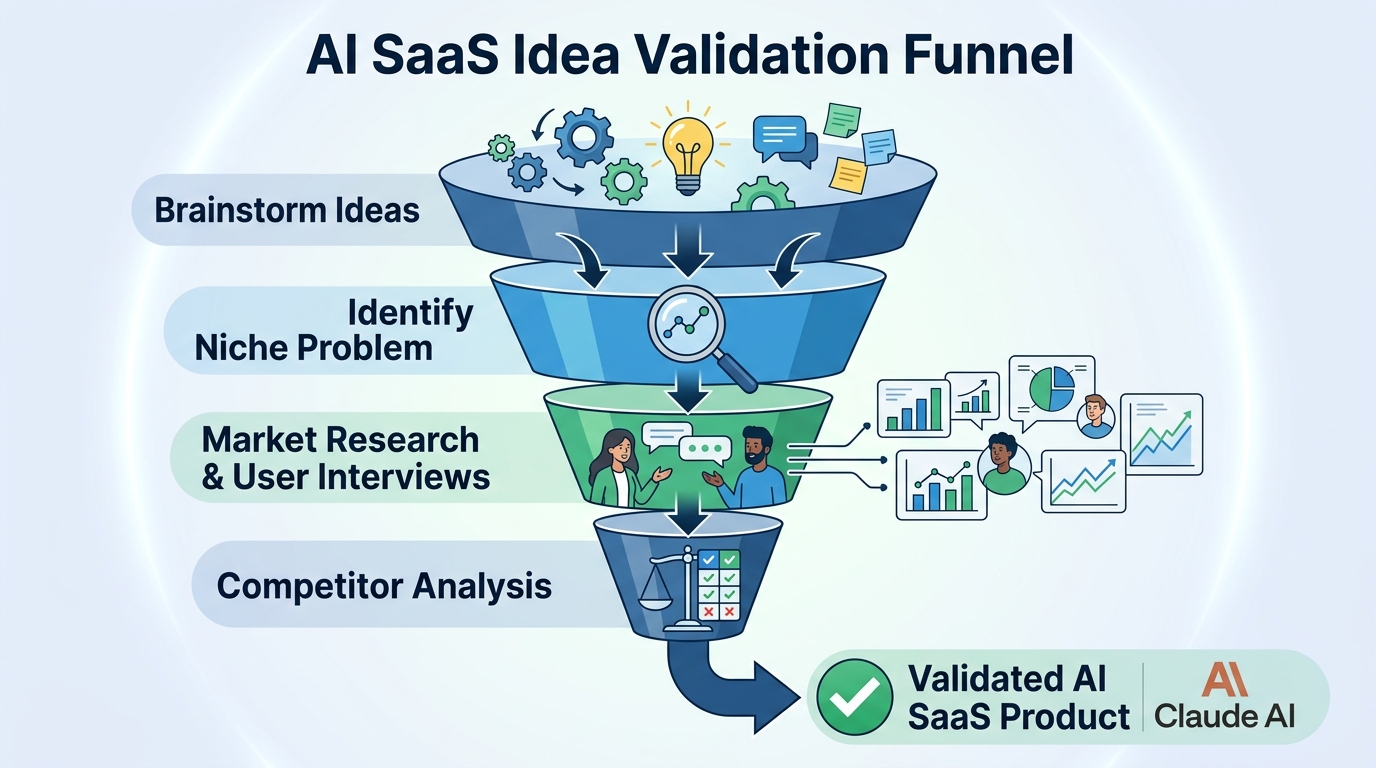
To validate your idea, start by identifying a niche market with unmet needs. Conduct thorough market research to understand potential users, their challenges, and existing solutions. Talk to prospective customers to gather feedback and validate demand for your proposed product.
Finally, research competitors to understand their offerings, pricing, and weaknesses. This helps you identify opportunities for differentiation and ensures your product brings unique value to the market. A strong validation process minimizes risks before significant development begins.
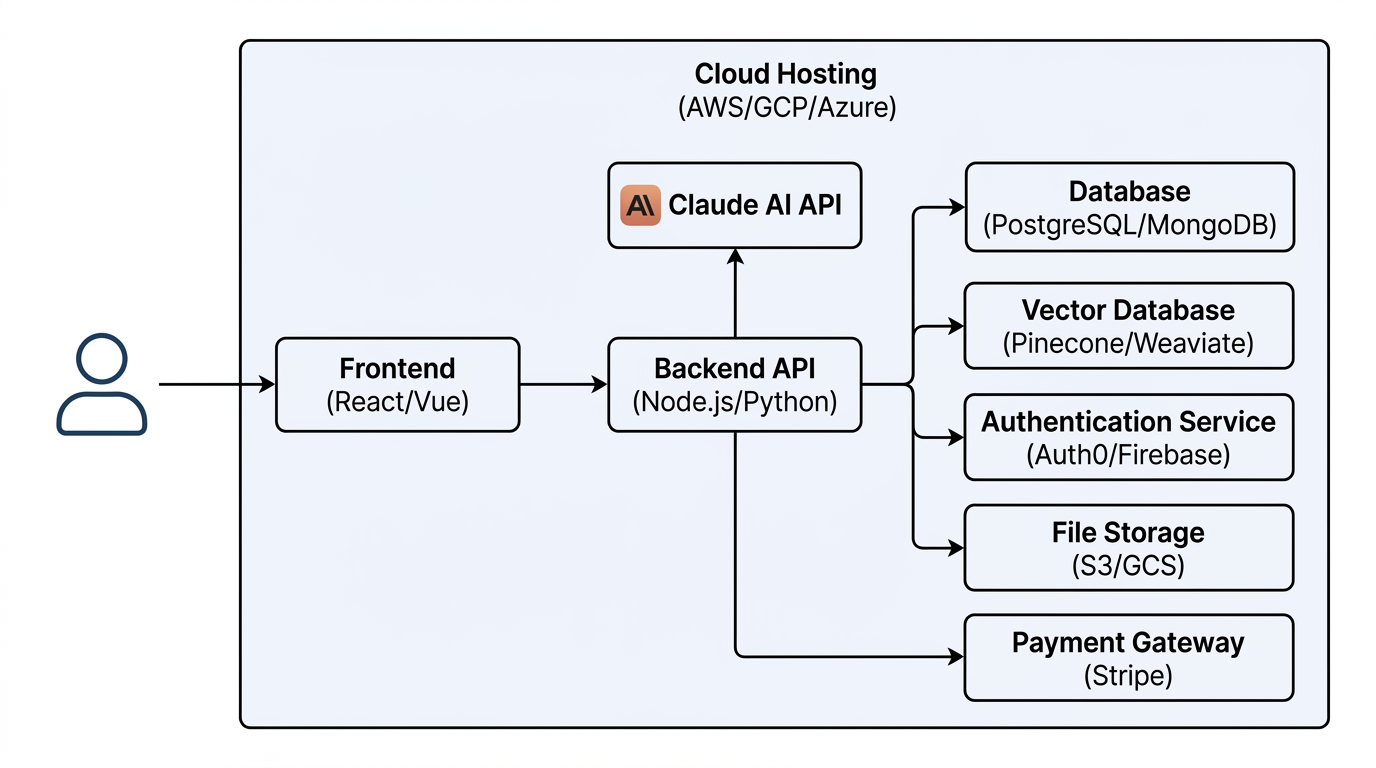
A well-designed architecture is fundamental to a scalable and maintainable AI SaaS product. At a high level, an AI SaaS application typically consists of several interconnected components. These include the frontend, backend, Claude API integration, database, authentication system, file storage, and payment gateway.
The frontend is what users interact with, while the backend handles business logic, data processing, and communication with external services. Claude AI integrates into the backend, processing prompts and returning intelligent responses. Databases store application data, and authentication manages user access.
File storage handles user-uploaded documents or media, and a payment gateway processes subscriptions or usage-based billing. All these components work together seamlessly to deliver the AI-powered features to your users. Scalability, maintainability, and security are crucial considerations from the outset.
| Component | Recommended Technologies | Key Considerations |
|---|---|---|
| Frontend | React, Vue.js, Angular | User experience, responsiveness, component reusability |
| Backend | Node.js (Express), Python (Django, Flask) | Performance, scalability, developer ecosystem |
| Database | PostgreSQL, MongoDB | Data structure (relational vs. NoSQL), query performance |
| Vector Database | Pinecone, Weaviate, ChromaDB | Semantic search, RAG, embedding storage |
| Authentication | Auth0, Firebase Auth, OAuth | Security, ease of integration, user management |
| Cloud Hosting | AWS, GCP, Azure | Scalability, global reach, managed services |
| Payment Gateway | Stripe, PayPal | Ease of integration, global coverage, subscription management |
Integrating Claude AI into your application involves connecting to its API, sending carefully crafted prompts, and processing the responses. Developers typically use an SDK provided by Anthropic or make direct HTTP requests to the API endpoints. This allows your application to leverage Claude's intelligence for various tasks.
When interacting with Claude, you send a 'message' containing your prompt, which includes user instructions and context. Claude then processes this message and returns a 'response' containing its generated text. It's crucial to handle potential errors, such as invalid API keys or rate limits, to ensure a robust user experience.
Let's look at a basic Python example for interacting with the Claude API. First, ensure you have the Anthropic Python client installed (pip install anthropic). You'll also need an API key, which should be stored securely, ideally as an environment variable.
import os
from anthropic import Anthropic

# Initialize the Claude client with your API key
# It's best practice to load API keys from environment variables
client = Anthropic(api_key=os.environ.get("ANTHROPIC_API_KEY"))

def get_claude_response(user_message: str) -> str:
    """Sends a message to Claude and returns its response."""
    try:
        response = client.messages.create(
            model="claude-3-opus-20240229", # Or another suitable Claude model
            max_tokens=1024,
            messages=[
                {"role": "user", "content": user_message
            ]
        )
        return response.content[0].text
    except Exception as e:
        print(f"Error interacting with Claude API: {e")
        return "Sorry, I couldn't process your request at the moment."

# Example usage:
if _ₙame__ == "__main__":
    message = "Explain the concept of Retrieval-Augmented Generation (RAG) in simple terms."
    claude_output = get_claude_response(message)
print(f"Claude's response:\n{claude_output")Prompt engineering is the art and science of crafting effective inputs to guide an LLM like Claude toward desired outputs. The quality of Claude's responses heavily depends on how well you design your prompts. Effective prompt engineering ensures consistent, accurate, and high-quality results for your AI SaaS features.
Key techniques include role prompting, where you instruct Claude to act as a specific persona (e.g., 'You are a senior software engineer'). Structured output prompts guide Claude to generate responses in a specific format, like JSON or XML, which is crucial for programmatic parsing. Few-shot examples provide Claude with a few input-output pairs to demonstrate the desired behavior, helping it generalize to new inputs.
Prompt templates are reusable structures that combine static instructions with dynamic user inputs. They ensure consistency across different user queries while allowing for personalization. Mastering these techniques is vital for building reliable and powerful AI features in your SaaS product.
# Continued from previous block - requires the Anthropic client setup

def get_structured_output(topic: str) -> str:
    """Gets a structured JSON output from Claude about a given topic."""
    prompt = f"""You are an expert technical writer. Your task is to explain a technical concept in a concise JSON format.Provide the concept name, a brief definition, and 3 key benefits.

    Here's the concept: {topic

    Respond only with a JSON object like this:
    {{
        "conceptₙame": "",
        "definition": "",
        "key_benefits": [
            "",
            "",
            ""
        ]

    """
    try:
        response = client.messages.create(
            model="claude-3-opus-20240229",
            max_tokens=1024,
            messages=[
                {"role": "user", "content": prompt
            ]
        )
        return response.content[0].text
    except Exception as e:
        print(f"Error getting structured output: {e")
        return "{"

# Example usage:
if _ₙame__ == "__main__":
    json_output = get_structured_output("Microservices Architecture")
print(f"\nStructured Output:\n{json_output")While Claude AI is incredibly powerful, its knowledge is limited to its training data. Retrieval-Augmented Generation (RAG) is a technique that allows Claude to go beyond its pre-trained knowledge by accessing external, up-to-date, or private information. This enables your AI SaaS product to answer questions using your specific business documents, private knowledge bases, or real-time data.
RAG works by first retrieving relevant information from a knowledge base and then feeding that information to the LLM as part of the prompt. This process significantly reduces hallucinations and provides more accurate, context-specific answers. It's essential for applications requiring factual accuracy based on proprietary data.
The key building blocks of a RAG system include embeddings, vector databases, and semantic search. Embeddings are numerical representations of text that capture its meaning. Vector databases store these embeddings, allowing for fast and efficient semantic search, where you find documents similar in meaning to a query, not just keyword matches.
# Continued from previous block - requires Anthropic client and potentially a vector database client
# For simplicity, this example simulates document retrieval.

# --- Step 1: Simulate Document Ingestion and Embedding Generation ---
# In a real RAG system, you'd use an embedding model (e.g., OpenAI's text-embedding-ada-002, Cohere's embed-english-v3.0)
# to convert documents into vector embeddings and store them in a vector database.

knowledge_base = {
    "doc₁": "Our company's return policy states that items can be returned within 30 days of purchase with a valid receipt. Customized items are non-refundable.",
    "doc₂": "Shipping usually takes 5-7 business days for standard delivery. Expedited shipping options are available at an additional cost.",
    "doc₃": "To reset your password, visit the login page and click 'Forgot Password'. Follow the instructions sent to your registered email address."


def get_relevant_documents(query: str) -> list[str]:
    """Simulates semantic search to retrieve relevant documents based on a query."
    # In a real system, this would involve embedding the query and performing a vector search.
    # For this example, we'll do a simple keyword match.
    relevant_docs = []
    for docᵢd, content in knowledge_base.items():
        if query.lower() in content.lower() or any(keyword in content.lower() for keyword in query.lower().split()):
            relevant_docs.append(content)
    return relevant_docs

# --- Step 2: Constructing the RAG Prompt ---
def get_rag_response(user_query: str) -> str:
    """Uses RAG to answer a user query with retrieved context."""
    # Retrieve relevant documents
    context_docs = get_relevant_documents(user_query)

    if not context_docs:
        return get_claude_response(user_query) # Fallback to general Claude if no context

    # Combine retrieved context with the user's query
    context_str = "\n\n".join(context_docs)
    rag_prompt = f"""You are a helpful assistant that answers questions based on the provided context. If the answer is not in the context, state that you don't have enough information.

    <context>
    {context_str
    </context>

    Question: {user_query
    Answer:"""

    return get_claude_response(rag_prompt)

# Example usage:
if _ₙame__ == "__main__":
    print("\n--- RAG Example ---")
    query₁ = "What is the return policy?"
    print(f"User: {query₁")
    print(f"Claude (RAG): {get_rag_response(query₁)")

    query₂ = "How long does shipping take?"
    print(f"User: {query₂")
    print(f"Claude (RAG): {get_rag_response(query₂)")

    query₃ = "What is the capital of France?" # Not in context
    print(f"User: {query₃")
    print(f"Claude (RAG): {get_rag_response(query₃)")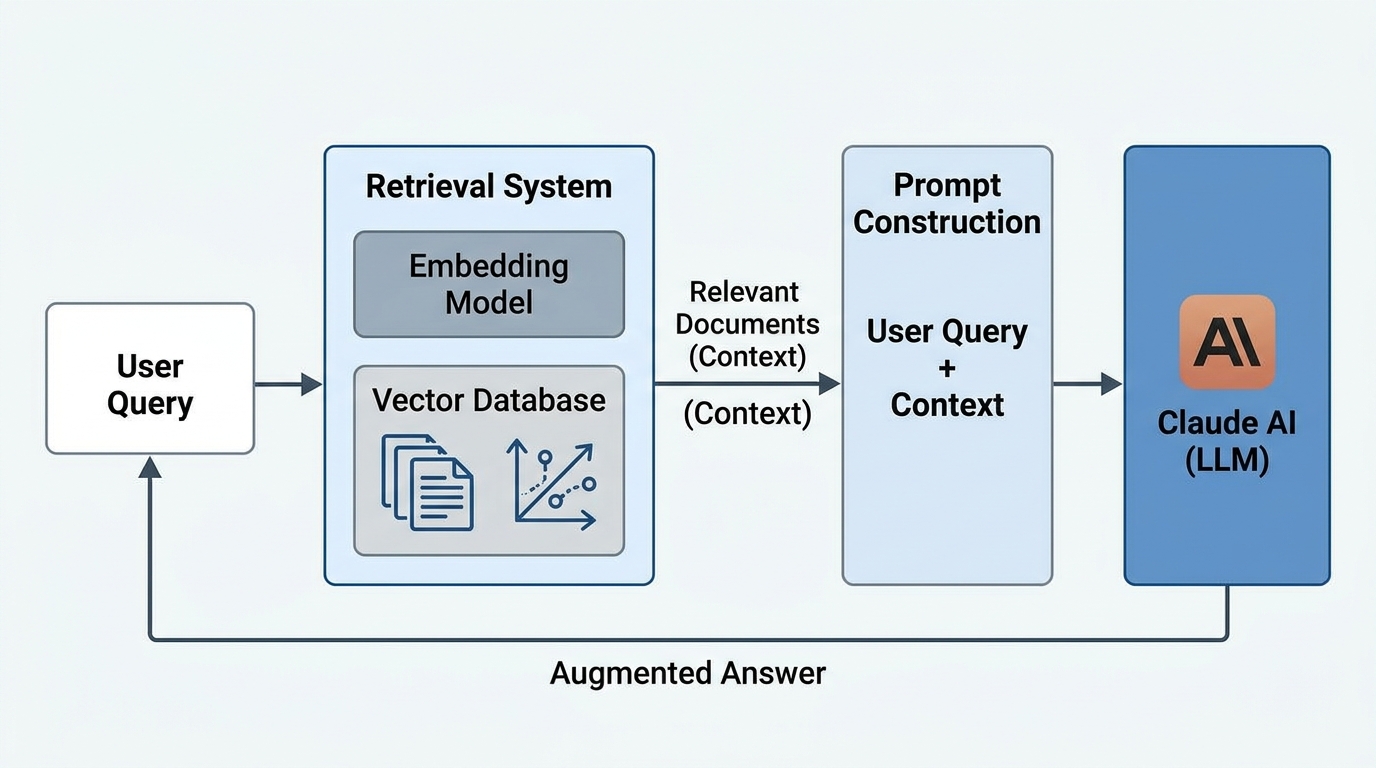
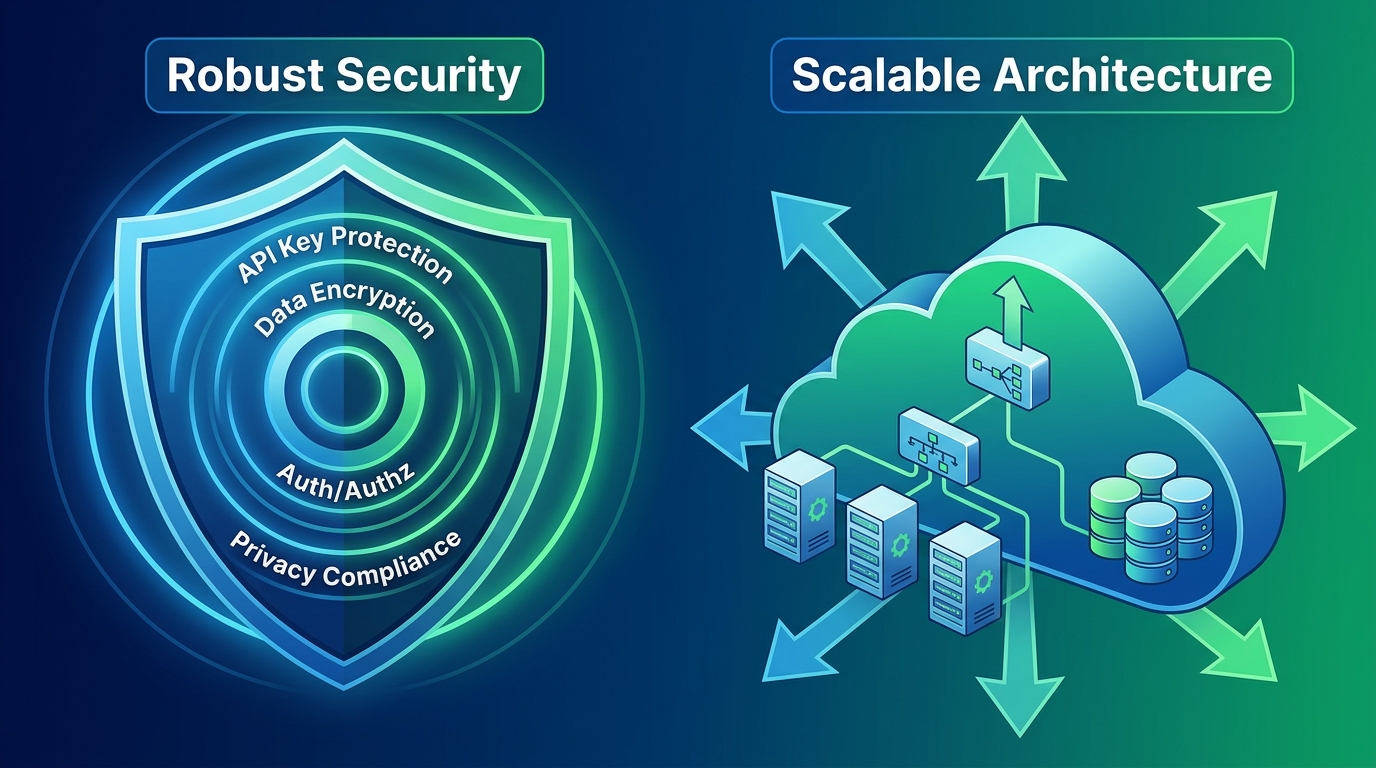
Security is paramount for any SaaS product, especially those handling sensitive user data and interacting with powerful AI models. Best practices include securing your API keys by never hardcoding them and using environment variables or secret management services. All sensitive user data, both in transit and at rest, must be encrypted to prevent unauthorized access.
Implement robust authentication and authorization mechanisms to control who can access your application and what actions they can perform. Always respect privacy requirements like GDPR and CCPA, ensuring transparent data handling and user consent. AI applications often require additional attention to data handling, as prompts and responses might contain sensitive information.
Choosing the right pricing model is critical for the financial success of your AI SaaS product. Common models include free tiers to attract users, subscription plans for recurring revenue, and usage-based billing where customers pay per API call or token used. Enterprise plans often offer custom features, dedicated support, and higher usage limits.
It's essential to balance your operating costs, particularly API usage fees, with the value you provide to customers. Clearly communicate your pricing structure and ensure it aligns with the perceived value of your AI features. Experiment with different models to find what resonates best with your target market.
As your user base grows, your AI SaaS application must scale efficiently. Strategies for handling increased traffic include using cloud-native services that auto-scale, such as serverless functions or managed Kubernetes. Efficiently managing API costs involves optimizing prompts, caching frequent responses, and implementing rate limiting on your end to prevent excessive usage.
For long-running or resource-intensive tasks, implement background processing using message queues and worker services. Continuously monitor your application's performance, API latency, and resource utilization to identify bottlenecks. Optimizing your infrastructure and code base based on these insights ensures your product remains responsive and cost-effective as it grows.
Building and operating AI SaaS products comes with its unique set of challenges. High API costs can quickly accumulate, especially with heavy usage or inefficient prompt design. Prompt inconsistency and AI hallucinations, where the model generates factually incorrect information, can degrade user trust and product quality.
Rate limits imposed by LLM providers can restrict the number of requests your application can make, leading to latency or service interruptions. Maintaining consistent response quality over time is also difficult as models evolve or as user queries become more diverse. Addressing these issues requires proactive strategies during development and in production.
To mitigate high costs, optimize prompts for token efficiency and implement caching for common queries. Combat hallucinations by using RAG with verified data sources and implementing human-in-the-loop review for critical outputs. Manage rate limits with exponential backoff and retry mechanisms, and consider load balancing requests across multiple API keys if allowed.
Large language models are already powering a diverse range of successful AI-powered products across various domains:
Building a successful AI SaaS product requires a strategic approach. Start with a focused Minimum Viable Product (MVP) that addresses a core problem effectively. This allows you to launch quickly and gather crucial user feedback early in the development cycle. Iteratively refine your product based on real-world usage and user needs.
Continuously monitor the quality of your AI's output and be prepared to improve prompts and models over time. Design workflows that effectively combine AI capabilities with human review, especially for critical tasks where accuracy is paramount. This hybrid approach often yields the best results, leveraging AI for efficiency and humans for nuanced judgment.
In summary, building an AI SaaS product with Claude AI is an exciting journey from idea validation and architectural planning to deployment, monetization, and ongoing refinement. Claude's powerful capabilities offer a strong foundation for innovative solutions. Embrace an iterative development mindset, prioritize user feedback, and continuously optimize your AI's performance.
By focusing on solving real problems and adhering to best practices, you can create impactful AI SaaS products that deliver significant value. Start with a simple MVP, refine it based on user feedback, and gradually expand its capabilities to build a thriving business.
Claude AI often excels in complex reasoning tasks and has a very long context window, which is beneficial for document analysis and handling extensive conversations. While GPT-4 is highly versatile, Claude's focus on safety and constitutional AI principles can be a strong differentiator for certain business applications requiring robust ethical guidelines. Its pricing structure and specific API features might also appeal to different development budgets and technical requirements.
Cost-effectiveness in AI SaaS relies on several strategies. Implement smart caching for frequent queries, optimize prompt engineering to reduce token usage, and leverage batch processing for non-real-time tasks. Consider tiered pricing models that align usage with cost, and continuously monitor API consumption to identify areas for optimization. Exploring fine-tuning smaller, specialized models for specific tasks can also reduce reliance on larger, more expensive LLMs for every interaction.
Beyond basic role prompting and few-shot examples, advanced techniques include chain-of-thought prompting to guide Claude through multi-step reasoning processes. Self-reflection prompts can encourage the model to critique and refine its own outputs. Integrating external tools or function calling allows Claude to interact with external systems, expanding its capabilities beyond pure text generation. Iterative prompting, where Claude's output is fed back into subsequent prompts, can also lead to more refined and accurate results.
Discover how to earn $1000 monthly leveraging Claude Co-work. This guide shows normal people how to start a profitable content creation business step-by-step
Find the top AI transcription APIs for Indian languages like Hindi, Gujarati, and Tamil. We compare accuracy, speed, features, and pricing to guide your choice
Discover OpenAI's GPT-6 Astra. Learn how this AI outperforms Claude Fable and Meta AI in performance, features, and real-world applications with comparisons