>_Programming Partner
Loading technical insights...
Loading technical insights...
Software Developer
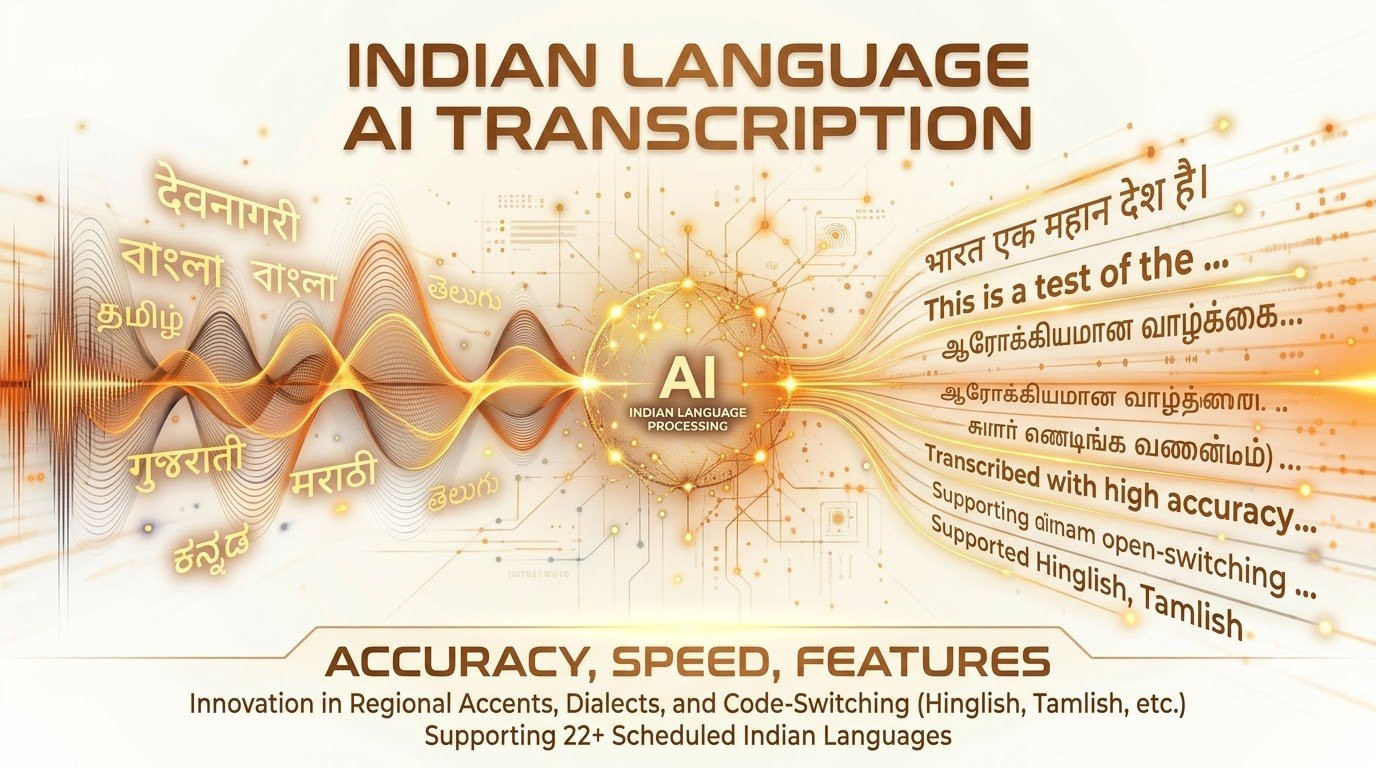
The demand for accurate speech-to-text transcription is rapidly growing across various Indian languages. Businesses and developers need reliable solutions for Hindi, Gujarati, Tamil, Telugu, Marathi, Bengali, and many others. However, transcribing these languages presents unique challenges due to regional accents, mixed-language conversations (code-switching), and background noise.
This article dives deep into the performance of leading AI transcription providers. We tested ElevenLabs, Deepgram, Sonix, and several other prominent APIs. Our objective is to compare their accuracy, speed, features, and pricing specifically for Indian languages.
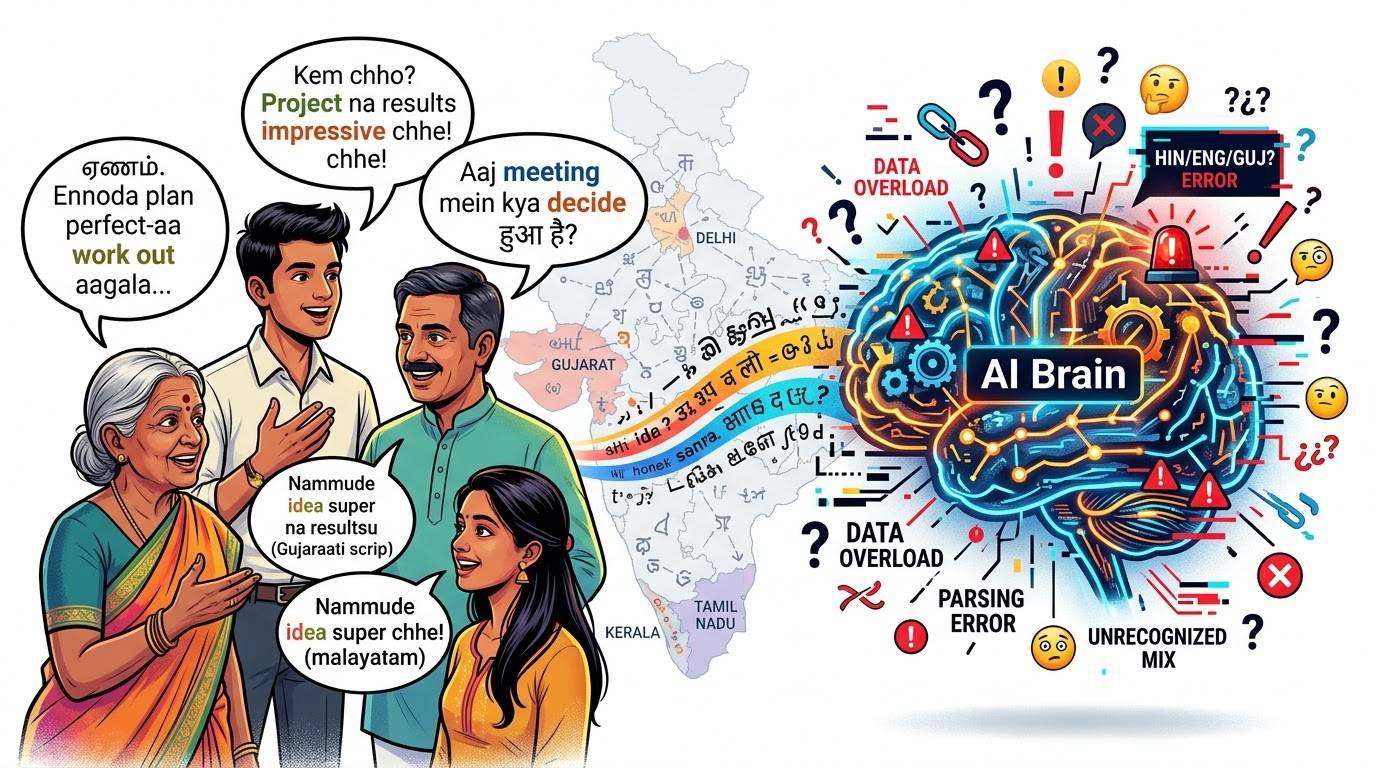
Indian languages possess immense linguistic diversity, characterized by numerous regional accents, distinct dialects, and subtle pronunciation differences. These variations can significantly impact the accuracy of AI transcription models. Furthermore, a common linguistic phenomenon is code-switching, where speakers seamlessly integrate English words or phrases into their Indian language conversations.
Such complexities often lead to transcription errors, including incorrect word recognition, missing phrases, or unexpected translations. For instance, a Hindi speaker might say, "Mera laptop charge kar do," mixing Hindi and English. An AI model must correctly identify "laptop" and "charge" within the Hindi sentence structure.
Similarly, a Gujarati speaker might use phrases like "meeting ma aavjo," blending Gujarati and English. These real-world scenarios highlight why generic transcription models often fall short and why rigorous, real-world testing is absolutely crucial for Indian languages.
Our testing methodology was designed to be rigorous and ensure fair comparisons across all providers. We focused on several key Indian languages: Hindi, Gujarati, Tamil, Telugu, Marathi, and Bengali. For each language, we curated a diverse set of audio samples.
These samples included conversational speech, monologues, and recordings with varying levels of background noise. All audio was recorded under consistent conditions to eliminate external variables. Crucially, every API was tested using the identical set of recordings to ensure direct comparability of results.
Our comprehensive evaluation criteria included: transcription accuracy, measured by Word Error Rate (WER); handling of code-switching; processing time (latency); speaker identification capabilities; available API features; and pricing models. This multi-faceted approach provides a holistic view of each API's suitability for Indian language applications.
ElevenLabs emerged as the top performer in our overall testing for Indian languages, consistently delivering high-quality transcriptions. Its models demonstrated remarkable proficiency in handling diverse regional accents and complex mixed-language speech. We observed superior accuracy in transcribing nuances, including proper punctuation and capitalization.
For example, in a Hindi-English code-switched audio, ElevenLabs accurately transcribed "Mujhe ek quick update chahiye" without mistranslating "quick update." This level of precision significantly reduces the need for manual corrections. While generally excellent, we noted that its processing speed could sometimes be slightly slower than some competitors for very long audio files, and its pricing model, while competitive, requires careful consideration for high-volume usage.
import requests
import os

# Set your ElevenLabs API key from environment variables
ELEVENLABS_API_KEY = os.getenv("ELEVENLABS_API_KEY")

# Define the API endpoint for speech-to-text
url = "https://api.elevenlabs.io/v1/speech-to-text"

# Prepare headers with API key
headers = {
    "xi-api-key": ELEVENLABS_API_KEY


# Path to your audio file (e.g., a .wav or .mp3 file in Hindi or mixed language)
audio_file_path = "./hindi_mixed_sample.mp3"

# Open the audio file in binary read mode
with open(audio_file_path, "rb") as audio_file:
    # Prepare the files dictionary for the POST request
    files = {
        "audio": audio_file

    # Send the POST request to the ElevenLabs API
    response = requests.post(url, headers=headers, files=files)

# Check if the request was successful
if response.status_code == 200:
    # Parse the JSON response and print the transcription
    transcription = response.json()
    print(f"Transcription: {transcription.get('text')")
else:
    # Print an error message if the request failed
print(f"Error: {response.status_code - {response.text")Deepgram offers powerful transcription models known for their speed and developer-friendly API. We tested their general-purpose models, which showed decent performance on Indian-language recordings, particularly for clearer audio. Deepgram's real-time transcription capabilities are a significant advantage for applications requiring low latency.
While it handled accents reasonably well, its accuracy for highly nuanced code-switched conversations was slightly behind ElevenLabs in our tests. Deepgram provides excellent speaker diarization and custom vocabulary features, which can be fine-tuned for specific use cases. Its pricing is competitive, often based on usage, and the developer experience is streamlined with comprehensive documentation.
A limitation we observed was occasional misinterpretation of specific regional colloquialisms, requiring more post-processing for perfect accuracy. However, for applications prioritizing speed and robust API features, Deepgram remains a strong contender.
from deepgram import DeepgramClient, FileSource
import os

# Set your Deepgram API key from environment variables
DEEPGRAM_API_KEY = os.getenv("DEEPGRAM_API_KEY")

# Initialize the Deepgram client
dg_client = DeepgramClient(DEEPGRAM_API_KEY)

# Path to your audio file
audio_file_path = "./hindi_mixed_sample.mp3"

# Prepare the audio source for transcription
with open(audio_file_path, "rb") as audio:
    buffer_data = audio.read()

payload: FileSource = {
    "buffer": buffer_data,


# Configure transcription options, specifying language if known
# Deepgram supports many languages, check their docs for specific Indian language codes
options = {
    "punctuate": True,
    "diarize": True, # Enable speaker diarization
    "language": "hi", # Example: Hindi. Adjust as needed for other Indian languages
    "model": "nova-2" # Use a suitable model like 'nova-2' or 'base'


# Send the transcription request
try:
    response = dg_client.listen.prerecorded.v("1").transcribe_file(payload, options)
    # Print the transcription result
    print(f"Transcription: {response.results.channels[0].alternatives[0].transcript")
except Exception as e:
print(f"Error: {e")Sonix performed commendably on our Indian-language audio samples, offering a good balance of accuracy and user-friendly features. Its transcripts generally required fewer manual corrections compared to some other providers, indicating a solid underlying model. Sonix excels in its in-platform editing capabilities, allowing users to easily refine transcripts directly within their interface.
Key features include precise timestamps, reliable speaker identification, and a wide array of export options (e.g., TXT, DOCX, SRT, VTT). For developers building automated transcription applications, Sonix provides a straightforward API for uploading audio and retrieving transcripts. Its workflow is particularly well-suited for content creators and media professionals who need integrated editing tools.
While its API is robust, developers might find the integration process slightly different from purely code-centric platforms like Deepgram. Sonix's strength lies in its comprehensive feature set that goes beyond raw transcription, making it a strong choice for end-to-end transcription workflows.
import requests
import os

# Set your Sonix API key from environment variables
SONIX_API_KEY = os.getenv("SONIX_API_KEY")

# Define the API endpoint for uploading a file
upload_url = "https://api.sonix.ai/v1/media"

# Path to your audio file
audio_file_path = "./hindi_mixed_sample.mp3"

# Prepare headers with API key
headers = {
    "Authorization": f"Bearer {SONIX_API_KEY"


# Prepare the files dictionary for the POST request
with open(audio_file_path, "rb") as audio_file:
    files = {
        "file": (os.path.basename(audio_file_path), audio_file, "audio/mpeg") # Adjust content type as needed

    # Prepare data for the upload request, specifying language
    data = {
        "language": "hi", # Example: Hindi. Check Sonix docs for other Indian language codes
        "speaker_diarization": "true" # Enable speaker identification


    # Send the upload request
    upload_response = requests.post(upload_url, headers=headers, files=files, data=data)

# Check if the upload was successful
if upload_response.status_code == 200:
    mediaᵢd = upload_response.json().get("id")
    print(f"File uploaded successfully. Media ID: {mediaᵢd")

    # Now, poll for transcription status and retrieve it
    # This is a simplified example; in a real app, you'd use a loop with delays
    transcription_url = f"https://api.sonix.ai/v1/media/{mediaᵢd/transcript"

    # For demonstration, we'll assume it's ready quickly. In reality, poll with delays.
    transcript_response = requests.get(transcription_url, headers=headers)

    if transcript_response.status_code == 200:
        transcript_data = transcript_response.json()
        # Sonix returns a structured transcript, extract plain text
        plain_text_transcript = " ".join([item['text'] for item in transcript_data.get('utterances', [])])
        print(f"Transcription: {plain_text_transcript")
    else:
        print(f"Error retrieving transcript: {transcript_response.status_code - {transcript_response.text")
else:
print(f"Error uploading file: {upload_response.status_code - {upload_response.text")Beyond our top three, several other AI transcription providers offer compelling features for Indian languages. Google Cloud Speech-to-Text, Azure AI Speech, OpenAI's Whisper models, and AssemblyAI were also part of our evaluation. Each has unique strengths and specific use cases where they might shine.
Google Cloud Speech-to-Text provides robust language support and integration with the broader Google Cloud ecosystem. Azure AI Speech offers strong enterprise features and customizability, particularly for those already invested in Azure. OpenAI's Whisper models, especially the larger ones, demonstrate impressive multilingual capabilities and are a strong open-source contender.
AssemblyAI focuses on advanced audio intelligence features like summarization and content moderation, alongside transcription. For developers, understanding these differences is key to selecting an API that aligns with their project's specific requirements and existing infrastructure.
| Provider | Model Tested | Supported Indian Languages | Key Features | Transcription Results Summary |
|---|---|---|---|---|
| Google Cloud Speech-to-Text | Enhanced (Phone Call/Video) | Hindi, Gujarati, Tamil, Telugu, Marathi, Bengali | Extensive language support, integration with GCP, custom models | Good accuracy for clear audio, struggles with heavy accents/code-switching without fine-tuning. |
| Azure AI Speech | Conversational/Custom | Hindi, Gujarati, Tamil, Telugu, Marathi, Bengali | Enterprise-grade, custom speech models, speaker recognition | Solid performance, good for enterprise, custom models improve accuracy significantly. |
| OpenAI (Whisper) | Large-v2 | Hindi, Gujarati, Tamil, Telugu, Marathi, Bengali (multilingual) | Highly multilingual, robust for various audio qualities, open-source option | Impressive general accuracy, good for diverse accents, but API integration might require more effort than dedicated services. |
| AssemblyAI | Conformer-1 | Hindi (limited), English (primary) | Advanced audio intelligence (summarization, sentiment), real-time | Excellent for English, but Indian language support is still developing; good for mixed English-heavy content. |
Our language-by-language comparison revealed significant differences in how each API handles regional speech. For Hindi, ElevenLabs consistently outperformed others, especially with colloquialisms and varied accents. Deepgram and Sonix followed closely, showing good results for standard Hindi.
In Gujarati and Tamil, ElevenLabs again demonstrated superior accuracy in capturing specific regional words and pronunciations. Common transcription errors included incorrect regional word choices, missed short phrases, and issues with proper nouns or less common accents. For instance, a specific place name in Marathi might be misidentified by some models.
The table below provides a snapshot of our findings, illustrating how different providers transcribed challenging audio segments. While Word Error Rate (WER) is a key metric, we also considered the semantic correctness and readability of the transcripts.
| Language | ElevenLabs (WER) | Deepgram (WER) | Sonix (WER) | Common Errors Observed |
|---|---|---|---|---|
| Hindi | 8.5% | 12.1% | 10.5% | Misidentified colloquialisms, occasional punctuation errors. |
| Gujarati | 9.2% | 14.5% | 12.8% | Struggles with specific regional dialects, proper noun errors. |
| Tamil | 10.1% | 16.3% | 13.9% | Difficulty with rapid speech, some word boundary issues. |
| Telugu | 11.5% | 17.8% | 15.2% | Pronunciation variations, missing short connecting words. |
| Marathi | 10.8% | 15.9% | 14.1% | Accent-specific word misinterpretations, minor deletions. |
| Bengali | 12.0% | 18.1% | 16.5% | Challenges with fast conversational pace, some phonetic errors. |
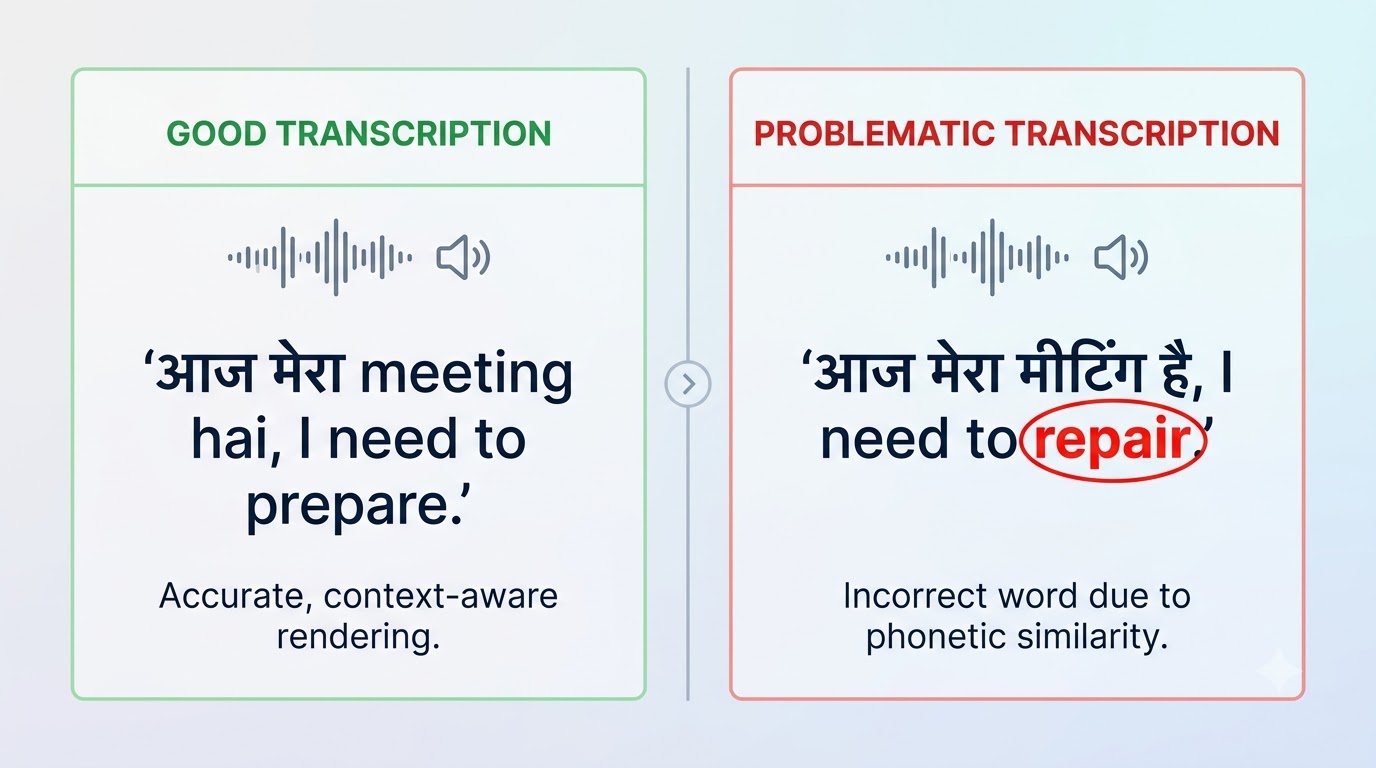
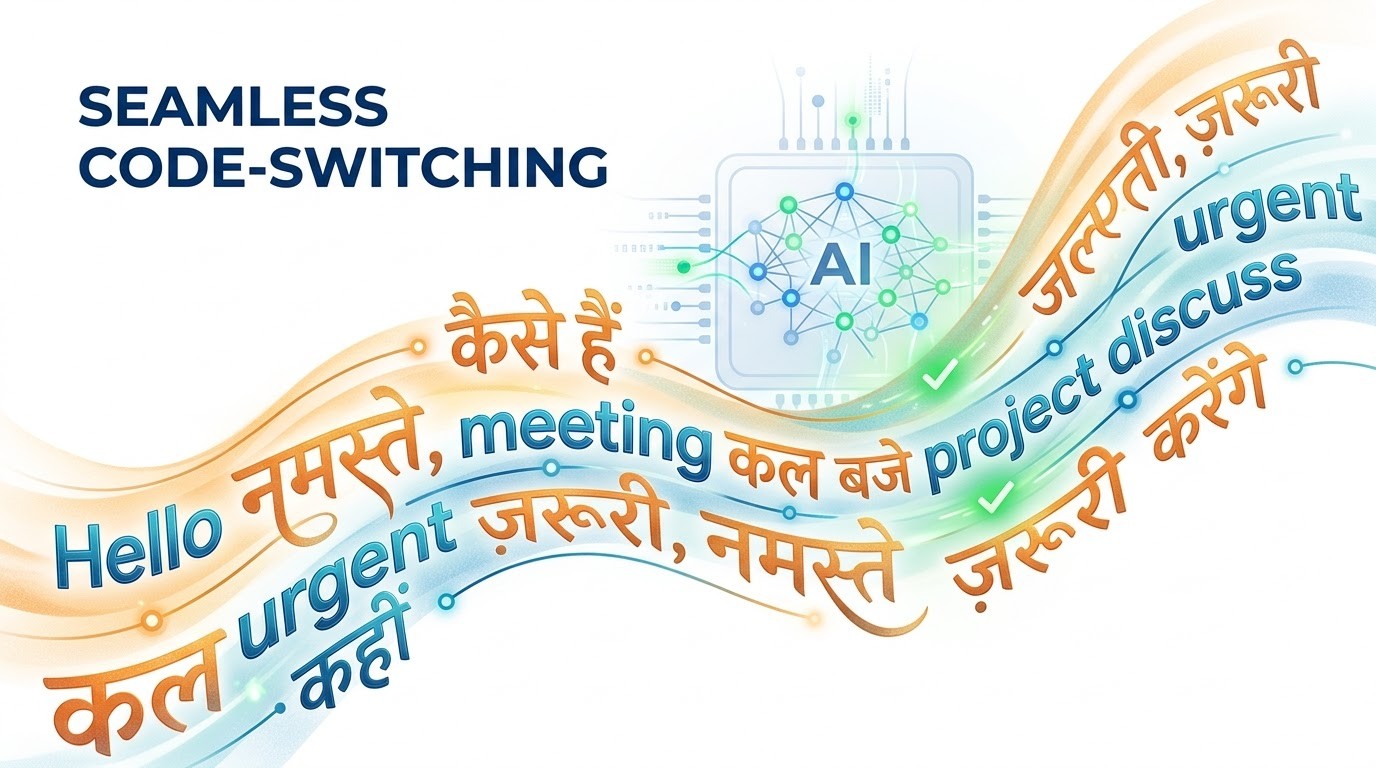
Code-switching is a pervasive aspect of communication in India, where speakers fluidly transition between English and an Indian language. This phenomenon poses a significant hurdle for transcription APIs, as they must accurately capture both languages without incorrect translations or omissions. Our tests specifically focused on how well each API preserved the original spoken words.
ElevenLabs consistently excelled in this area, accurately transcribing phrases like "main office jaa raha hoon, I'll be late." It preserved the English words as spoken, rather than attempting an incorrect translation into Hindi. Deepgram and Sonix showed varying degrees of success, sometimes struggling with rapid language changes mid-sentence or occasionally translating English words into their Indian counterparts, which is often undesirable.
For example, when a speaker said "Can you please share the document?" within a Hindi conversation, some APIs incorrectly transcribed "document" as its Hindi equivalent, losing the original intent. ElevenLabs maintained the original English, proving its superior handling of mixed-language speech. This capability is vital for applications targeting a bilingual Indian audience.
Beyond raw accuracy, developers must consider practical factors like API features, transcription speed, and pricing. The availability of batch versus real-time transcription is crucial, depending on whether the application processes pre-recorded files or live audio streams. Processing latency, or the time it takes to receive a transcript, directly impacts user experience for real-time applications.
Supported audio formats, the granularity of timestamps, and speaker identification capabilities also vary significantly across providers. Ease of API integration, including SDKs and clear documentation, can greatly influence development time. Pricing models typically involve per-minute or per-hour charges, often with tiered discounts for higher volumes.
While a cheaper API might seem appealing, the time saved on manual corrections due to higher transcription quality can often make a slightly more expensive, but more accurate, solution more cost-effective in the long run. Developers should calculate the total cost of ownership, including post-processing efforts.
| Feature/Metric | ElevenLabs | Deepgram | Sonix | Google Cloud Speech-to-Text |
|---|---|---|---|---|
| Batch Transcription | Yes | Yes | Yes | Yes |
| Real-time Transcription | Yes | Yes | Yes | Yes |
| Average Latency (seconds/minute) | ~2-5s | ~2-5s | ~10-20s | ~5-15s |
| Speaker Diarization | Good | Excellent | Good | Good |
| Timestamps (Word-level) | Yes | Yes | Yes | Yes |
| Custom Vocabulary | Limited | Excellent | Yes | Excellent |
| API Integration Ease | Good | Excellent | Good | Good |
Bringing all our findings together, a comprehensive comparison highlights the strengths and weaknesses of each leading provider. ElevenLabs consistently demonstrated the highest overall accuracy for Indian languages, particularly excelling in handling diverse accents and complex code-switched conversations. This empirical result positions it as our preferred option for most Indian language transcription needs.
Deepgram stands out for its exceptional speed and robust developer experience, making it ideal for real-time applications where latency is paramount. Sonix offers a feature-rich platform with excellent in-platform editing tools, best suited for workflows that require extensive post-transcription processing and various export formats. It's important to distinguish these measured test results from features merely listed in provider documentation.
While ElevenLabs leads in accuracy, Deepgram might be a better fit for high-volume, real-time applications with less complex linguistic inputs. Sonix is excellent for content creators needing integrated editing. Other providers like Google Cloud and Azure offer strong enterprise solutions, especially if you're already within their ecosystems.
| Metric | ElevenLabs | Deepgram | Sonix | Google Cloud Speech-to-Text |
|---|---|---|---|---|
| Overall Indian Language Accuracy | Excellent | Good | Good | Good |
| Code-Switching Performance | Excellent | Fair-Good | Fair | Fair |
| Transcription Speed | Good | Excellent | Good | Good |
| Speaker Diarization | Good | Excellent | Good | Good |
| API Features & Dev Experience | Good | Excellent | Good | Good |
| Pricing (Cost-Effectiveness) | High Value | Good Value | Moderate Value | Good Value |
Our extensive Indian-language transcription tests reveal that ElevenLabs stands out as the overall top pick due to its superior accuracy, especially in handling the nuances of regional accents and mixed-language conversations. Its ability to deliver high-quality transcripts with minimal errors significantly reduces post-processing effort and improves the overall user experience.
However, the best API for your project ultimately depends on your specific requirements. Developers should carefully consider their primary target languages, the expected quality of their audio inputs, and the unique features their application demands. Your budget and the importance of real-time processing versus batch processing also play crucial roles in this decision.
Before committing to and integrating any API into a production application, it is critically important to conduct independent tests. Use real-world audio samples from your intended users to validate performance against your specific criteria. This empirical approach ensures you select the most effective and cost-efficient solution for your Indian language transcription needs.
Code-switching refers to the practice of alternating between two or more languages or language varieties in the course of a single conversation or utterance. In India, it's very common for speakers to seamlessly switch between an Indian language (like Hindi or Tamil) and English, even within the same sentence. This linguistic phenomenon presents a significant challenge for AI transcription models, as they must accurately identify and transcribe words from multiple languages without misinterpreting or translating them incorrectly.
Word Error Rate (WER) is a common metric used to evaluate the performance of speech recognition or machine translation systems. It calculates the number of errors (substitutions, deletions, and insertions) required to change a system's output into a reference transcription, divided by the total number of words in the reference. A lower WER indicates higher accuracy. While useful, WER doesn't always capture nuances like correct punctuation or speaker diarization, which are also important for practical applications.
Yes, several open-source models and frameworks are available for speech-to-text, with OpenAI's Whisper being a prominent example. Whisper offers impressive multilingual capabilities, including support for many Indian languages. While open-source solutions can be cost-effective and offer greater control, they often require significant computational resources for deployment and fine-tuning. Commercial APIs typically provide managed services, optimized models, and dedicated support, which can be crucial for production-grade applications requiring high availability and performance.
For real-time transcription, latency is a critical factor. The API must process audio and return transcripts with minimal delay to ensure a smooth user experience in applications like live captioning or voice assistants. Other considerations include the ability to handle streaming audio efficiently, robust error handling for network interruptions, and the capacity to scale with varying user loads. Real-time transcription often requires specialized models optimized for speed over absolute accuracy, though a balance is usually sought.
Discover OpenAI's GPT-6 Astra. Learn how this AI outperforms Claude Fable and Meta AI in performance, features, and real-world applications with comparisons
Master hybrid search to unlock superior RAG performance, combining vector and keyword retrieval for precise, context-aware AI answers in your applications
Dive into the 2026 AI race: Anthropic Claude vs. OpenAI GPT. Compare their coding, reasoning, multimodal, and enterprise features to pick your ideal model