>_Programming Partner
Loading technical insights...
Loading technical insights...
Software Developer

The digital age offers unprecedented opportunities for individuals to build income streams from anywhere. One of the most exciting avenues today involves leveraging advanced AI tools like Claude Co-work. This powerful assistant can transform how you approach work and entrepreneurship.
This article will guide you through a practical, step-by-step method to earn $1000 or more monthly using Claude Co-work. We will focus on a specific, high-demand business model: AI-assisted content creation. You'll learn how to harness Claude's capabilities to deliver valuable services to clients.
Claude Co-work is an advanced AI assistant developed by Anthropic, designed for complex reasoning, creative tasks, and extensive context understanding. It excels at processing long documents, generating nuanced text, and following intricate instructions. These features make it an invaluable partner for various professional tasks.
Its core power lies in its ability to act as a sophisticated co-worker, assisting with research, drafting, brainstorming, and refining content. For a normal person looking to start a business, Claude significantly lowers the barrier to entry. It allows you to produce high-quality output without needing extensive prior experience in every domain.
Getting started with Claude Co-work is straightforward. You'll need to visit the Anthropic website and sign up for an account. Depending on your usage, you might opt for a free tier or a paid subscription for more extensive access and features.
Once registered, familiarize yourself with the interface. It's typically a chat-based environment where you input prompts and receive responses. Understanding how to craft effective prompts is key to unlocking Claude's full potential for your business.
Content creation is a booming industry, with businesses constantly needing fresh articles, blog posts, and marketing copy. Claude Co-work can be your secret weapon to deliver high-quality content efficiently. Here’s how to start your own AI-assisted content creation business.
Decide what type of content you want to specialize in. This could be blog posts for tech startups, social media captions for e-commerce, or email newsletters for local businesses. A niche helps you target clients more effectively and become an expert in that area.
Create a few sample pieces of content using Claude Co-work to showcase your abilities. Develop a clear pricing structure, perhaps per word, per article, or per project. Aim for competitive rates that reflect the value you provide.
Utilize freelancing platforms like Upwork or Fiverr, or reach out directly to small businesses. Clearly communicate that you use AI tools to enhance efficiency and quality, emphasizing the human oversight you provide. Focus on building trust and delivering excellent results.
Once you have a client and a content brief, use Claude Co-work to generate initial drafts. Craft detailed prompts that include the topic, target audience, tone, keywords, and desired structure. Claude will quickly produce a comprehensive draft.
import anthropic
import os

# Set your Anthropic API key from environment variables
client = anthropic.Anthropic(api_key=os.environ.get("ANTHROPIC_API_KEY"))

def generate_blog_post_draft(topic: str, audience: str, tone: str, keywords: list, length_words: int) -> str:
    """Generates a blog post draft using Claude Co-work."""
    prompt_template = f"""You are an expert content writer. Write a detailed blog post draft about '{topic' for a '{audience' audience. The tone should be '{tone'. Incorporate the following keywords naturally: {', '.join(keywords). The post should be approximately {length_words words long and include an introduction, 3-4 main sections with headings, and a conclusion. Focus on providing actionable advice and clear explanations.

<article>
<title>Draft Title Here</title>
<body>
"""

    try:
        message = client.messages.create(
            model="claude-3-opus-20240229", # Or another suitable Claude model
            max_tokens=2000, # Adjust based on desired output length
            messages=[
                {"role": "user", "content": prompt_template
            ]
        )
        # Extract the content from the message object
        return message.content[0].text
    except Exception as e:
        print(f"Error generating content: {e")
        return ""

# Example usage:
if _ₙame__ == "__main__":
    # Ensure ANTHROPIC_API_KEY is set in your environment
    # For example: export ANTHROPIC_API_KEY='your_api_key_here'

    blog_topic = "The Future of Remote Work Tools"
    target_audience = "HR professionals and team managers"
    desired_tone = "informative and forward-thinking"
    seo_keywords = ["remote work tools", "hybrid work", "team collaboration", "future of work"]
    word_count = 1200

    print(f"Generating draft for: {blog_topic...")
    draft = generate_blog_post_draft(blog_topic, target_audience, desired_tone, seo_keywords, word_count)
    if draft:
        print("\n--- Generated Blog Post Draft ---")
        print(draft)
    else:
print("Failed to generate blog post draft.")This is a critical step where your human touch adds immense value. Review Claude's draft for accuracy, tone consistency, originality, and adherence to the client's brand voice. Edit, fact-check, and refine the content to ensure it's polished and perfectly meets the client's expectations.
Deliver the refined content to your client. Be open to feedback and make necessary revisions. Positive client testimonials and repeat business are key to growing your income. Aim for exceptional service to build a strong reputation.
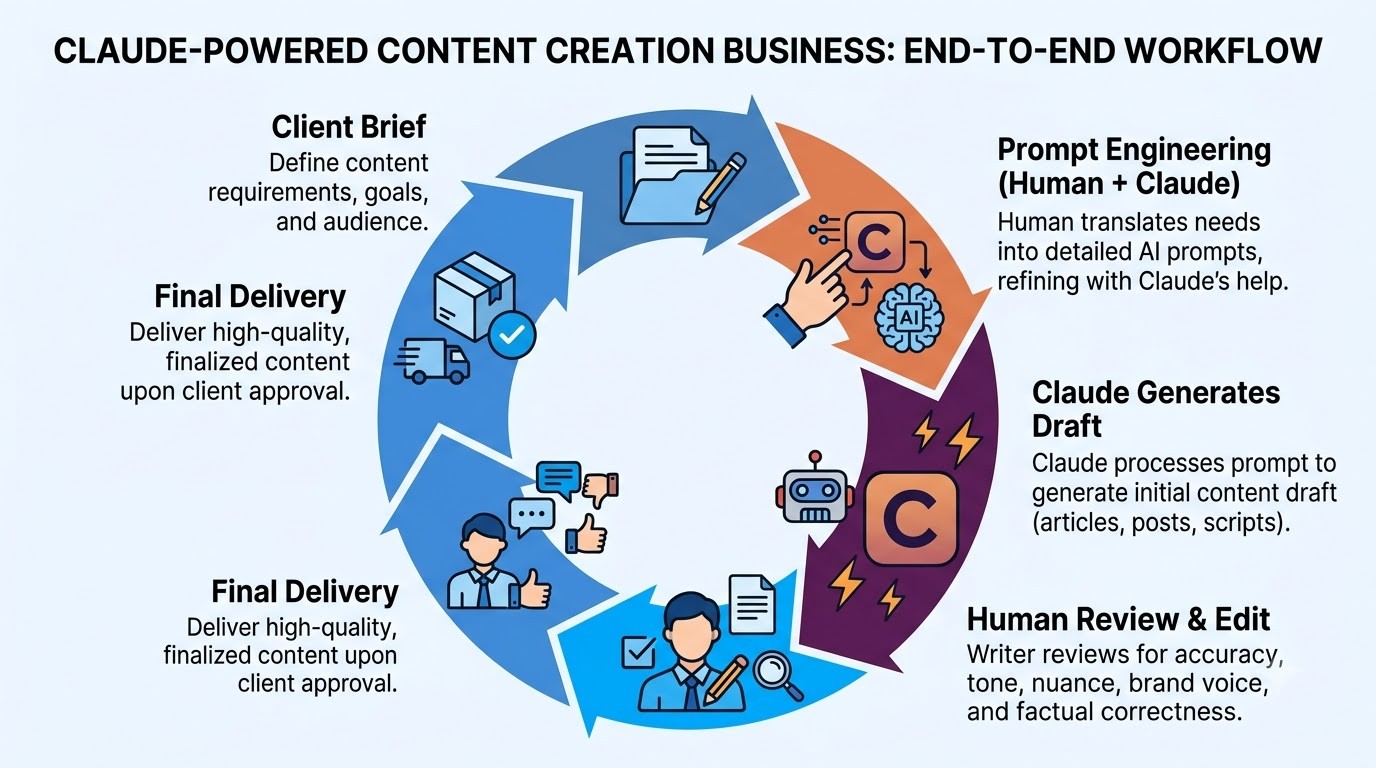
Once you've mastered the basics, you can scale your content creation business to earn more than $1000 monthly. This involves taking on more clients, diversifying your services, and optimizing your workflow. Automation and strategic planning are crucial for growth.
As your client base grows, managing different content types and client requirements becomes complex. Develop a library of prompt templates for common content requests. This ensures consistency and speeds up the drafting process with Claude.
import anthropic
import os

# Ensure ANTHROPIC_API_KEY is set in your environment
client = anthropic.Anthropic(api_key=os.environ.get("ANTHROPIC_API_KEY"))

def get_prompt_template(content_type: str) -> str:
    """Returns a specific prompt template based on content type."""
    templates = {
        "blog_post": "You are an expert content writer. Write a detailed blog post draft about '{topic' for a '{audience' audience. The tone should be '{tone'. Incorporate the following keywords naturally: {keywords. The post should be approximately {length_words words long and include an introduction, 3-4 main sections with headings, and a conclusion. Focus on providing actionable advice and clear explanations.\n\n<article>\n<title>Draft Title Here</title>\n<body>\n",
        "social_media_caption": "Craft 5 engaging social media captions for a post about '{topic'. Target audience: '{audience'. Include relevant emojis and hashtags: {hashtags. Tone: '{tone'.\n\n",
        "emailₙewsletter": "Write a concise and engaging email newsletter section about '{topic'. Target audience: '{audience'. Goal: '{goal'. Include a clear call to action: '{call_to_action'. Tone: '{tone'.\n\n"

    return templates.get(content_type, "Please provide a detailed prompt for {topic.")

def generate_content_with_template(content_type: str, **kwargs) -> str:
    """Generates content using a template and Claude Co-work."""
    template = get_prompt_template(content_type)
    formatted_prompt = template.format(**kwargs)

    try:
        message = client.messages.create(
            model="claude-3-opus-20240229",
            max_tokens=1500,
            messages=[
                {"role": "user", "content": formatted_prompt
            ]
        )
        return message.content[0].text
    except Exception as e:
        print(f"Error generating content: {e")
        return ""

# Example usage for a social media caption:
if _ₙame__ == "__main__":
    sm_topic = "New Product Launch: Eco-Friendly Water Bottles"
    sm_audience = "environmentally conscious consumers"
    sm_hashtags = "#EcoFriendly #SustainableLiving #NewProduct #WaterBottle"
    sm_tone = "enthusiastic and inspiring"

    print(f"Generating social media captions for: {sm_topic...")
    captions = generate_content_with_template(
        "social_media_caption",
        topic=sm_topic,
        audience=sm_audience,
        hashtags=sm_hashtags,
        tone=sm_tone
    )
    if captions:
        print("\n--- Generated Social Media Captions ---")
        print(captions)
    else:
print("Failed to generate social media captions.")Beyond basic articles, consider offering services like content strategy, SEO optimization, or content repurposing. Claude can assist with keyword research, outlining content calendars, and even adapting existing content for different platforms. This expands your earning potential significantly.
Long-term client relationships are the backbone of a sustainable business. Consistently deliver high-quality work, communicate effectively, and be reliable. Satisfied clients often lead to referrals and recurring projects, which are invaluable for steady income.
While many AI tools exist, Claude Co-work stands out for specific strengths that are highly beneficial for content creation businesses. Understanding these differences helps you position your services and choose the right tools for various tasks. Here's a comparison with other popular LLMs.
| Feature | Claude Co-work (Anthropic) | ChatGPT (OpenAI) | Gemini (Google) |
|---|---|---|---|
| Context Window | Very large (up to 200K tokens) | Large (up to 128K tokens) | Large (up to 1M tokens) |
| Reasoning & Logic | Excellent, especially for complex tasks | Very good, strong general knowledge | Good, improving rapidly |
| Creativity & Nuance | High, excels at human-like text | High, versatile for creative writing | Good, strong for diverse formats |
| Ease of Use (API) | Developer-friendly, clear documentation | Well-documented, widely adopted | Good, integrates with Google Cloud |
| Pricing Model | Tiered, competitive for long contexts | Tiered, widely accessible | Tiered, integrated with Google Cloud services |
| Unique Strengths | Constitutional AI for safety, long context | Broad general knowledge, vast user base | Multimodal capabilities, Google ecosystem integration |
Claude's strength in handling extensive context and its robust reasoning capabilities make it particularly adept at generating long-form, coherent, and nuanced content. This is a significant advantage for articles, reports, and detailed marketing materials. While other models are powerful, Claude often shines in tasks requiring deep understanding and consistent tone over many paragraphs.
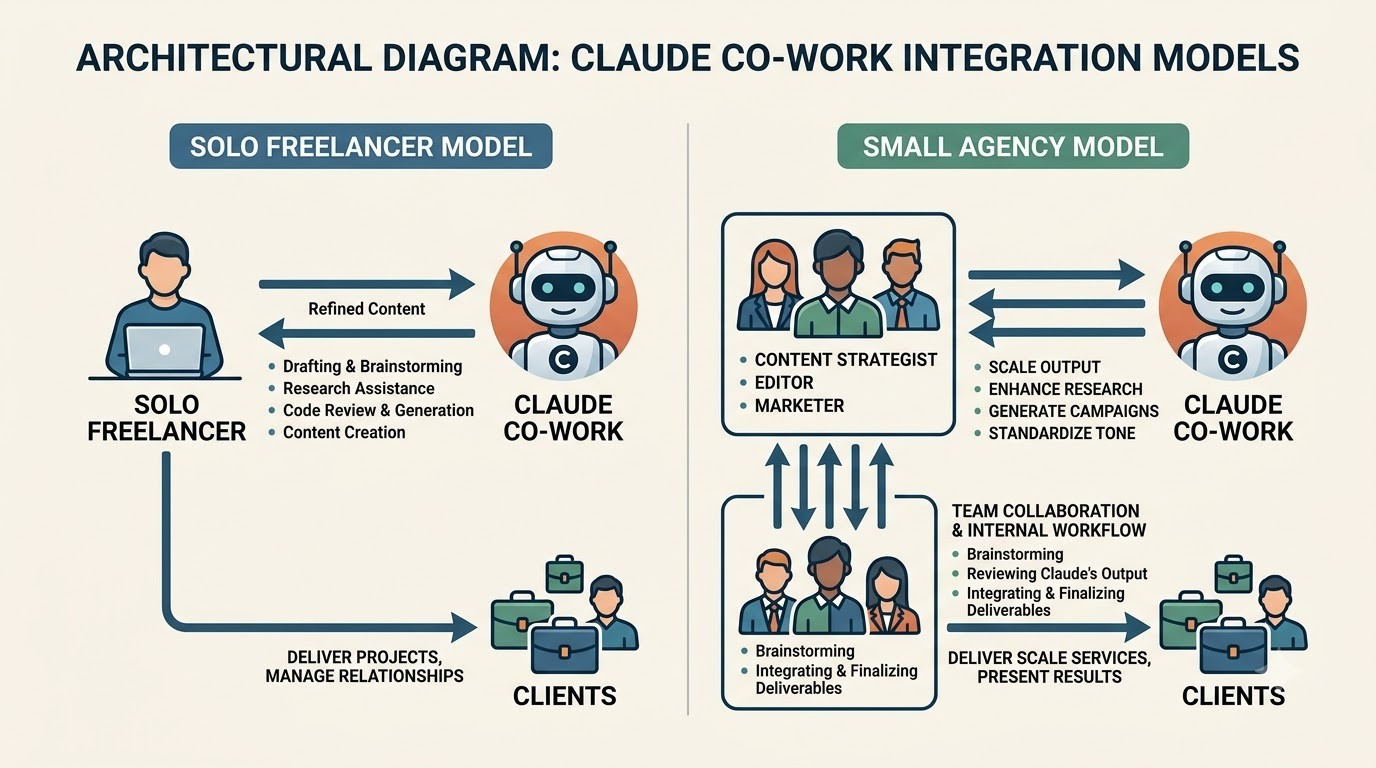
To maximize your earnings and client satisfaction, optimizing your workflow and consistently ensuring high-quality output is essential. This involves smart prompt engineering, iterative refinement, and maintaining ethical standards. Treat Claude as a powerful assistant, not a fully autonomous creator.
The quality of Claude's output directly correlates with the quality of your prompts. Be specific, provide examples, define the desired persona for Claude, and specify output format. Experiment with different phrasing to find what yields the best results for each content type.
Don't expect perfect content on the first try. Use Claude in an iterative process: generate a draft, review it, then provide feedback to Claude for revisions. This back-and-forth helps fine-tune the output to meet precise requirements. It's like collaborating with a human co-worker.
Always fact-check any information generated by Claude, especially for technical or sensitive topics. Use plagiarism checkers to ensure originality, although Claude's outputs are generally unique. Your human expertise is crucial for maintaining accuracy and a distinct voice.
While Claude Co-work is incredibly powerful, you might encounter some common challenges when using it for business. Being aware of these pitfalls and knowing how to address them will save you time and ensure client satisfaction. Proactive problem-solving is key.
If Claude produces generic content, it often means your prompt wasn't specific enough. Add more details, examples, and constraints to your prompts. Ask Claude to adopt a unique persona or to focus on a specific angle to make the content stand out.
Clients often have a distinct brand voice. Provide Claude with examples of the client's existing content or a style guide. Explicitly instruct Claude on the desired tone, vocabulary, and stylistic preferences to ensure consistency across all generated content.
For highly specialized topics, Claude might lack the deep domain expertise. In such cases, provide Claude with background information, key facts, or research materials. You can also break down complex topics into smaller, manageable sections for Claude to tackle individually.
LLMs can sometimes 'hallucinate' or present incorrect information as fact. Always verify critical data, statistics, and claims generated by Claude. Your role as the human editor is to ensure accuracy and credibility, protecting both your reputation and your client's.
Claude Co-work offers an incredible opportunity for anyone looking to start or grow a business, especially in content creation. By combining Claude's AI capabilities with your human oversight and creativity, you can deliver high-quality services efficiently. This empowers you to earn a significant income, like $1000 or more monthly.
The future of work is increasingly collaborative, with AI tools acting as powerful co-pilots. Embracing Claude Co-work allows you to tap into new markets, scale your efforts, and build a sustainable entrepreneurial venture. Start experimenting today and unlock your potential for AI-powered success.
Claude Co-work is versatile for various content types. You can generate blog posts, articles, social media captions, email newsletters, product descriptions, marketing copy, and even scripts for videos or podcasts. Its ability to maintain context and follow complex instructions makes it suitable for long-form and specialized content.
You can find clients through several channels. Freelancing platforms like Upwork, Fiverr, and LinkedIn are excellent starting points. Networking with small businesses, local startups, or even offering your services to friends and family can also generate initial leads. Showcasing a portfolio of Claude-generated content (with human refinement) is crucial.
Ethical use involves transparency and originality. Always ensure the content is fact-checked and edited by a human to maintain accuracy and avoid AI hallucinations. Disclose AI assistance to clients if they require it, and never present AI-generated content as purely human-created without proper review. Focus on using AI as a powerful assistant, not a replacement for human creativity and oversight.
Yes, Claude Co-work has strong multilingual capabilities. You can prompt it to generate content in various languages or translate existing content. This opens up opportunities to serve international clients or create localized content, significantly expanding your potential market.
Find the top AI transcription APIs for Indian languages like Hindi, Gujarati, and Tamil. We compare accuracy, speed, features, and pricing to guide your choice
Discover OpenAI's GPT-6 Astra. Learn how this AI outperforms Claude Fable and Meta AI in performance, features, and real-world applications with comparisons
Master hybrid search to unlock superior RAG performance, combining vector and keyword retrieval for precise, context-aware AI answers in your applications