>_Programming Partner
Loading technical insights...
Loading technical insights...
Software Developer
The year 2026 marks a pivotal moment in the generative AI landscape, with Anthropic and OpenAI standing as the undisputed leaders. Their ongoing competition is not just a technological race; it's a battle shaping the future of how we interact with artificial intelligence. This rivalry drives innovation, pushing the boundaries of what AI can achieve across various domains.
This comparison will delve into practical areas where these models truly shine or face challenges. We will focus on critical aspects such as coding, advanced reasoning, AI agents, multimodal capabilities, API performance, cost-effectiveness, and enterprise suitability. Our goal is to provide a balanced perspective, helping you understand which model might be your ideal partner in 2026.
To provide a clear comparison, we will focus on the flagship models from each company that are most relevant in 2026. For Anthropic, this includes Claude Fable 5, Opus 5, and Sonnet 5, representing their latest advancements in intelligence and efficiency. OpenAI's contenders are the GPT-5.6 series models, which have evolved significantly in their capabilities and deployment.
These specific models offer a direct comparison across various benchmarks and real-world applications. Understanding their individual strengths and intended use cases is crucial for making informed decisions. Below is a concise table outlining their positioning and key features.
| Feature | Anthropic Claude Fable 5 / Opus 5 | OpenAI GPT-5.6 Series |
|---|---|---|
| Positioning | Flagship, highly capable, safety-focused | Flagship, general-purpose, cutting-edge |
| Context Window | Extremely large (e.g., 1M+ tokens) | Very large (e.g., 500K+ tokens) |
| Reasoning | Strong, especially for complex, multi-step tasks | Excellent, broad general intelligence |
| Coding | Highly optimized for complex coding and agentic workflows | Very strong for generation, debugging, and understanding |
| Vision | Advanced multimodal understanding (images, documents) | Robust multimodal capabilities (images, video snippets) |
| Tool Use | Excellent for agent orchestration and external tool integration | Strong for function calling and API interactions |
| Agent Capabilities | Designed for long-running, autonomous agents | Capable of building sophisticated agents |
| API Availability | Generally available with tiered access | Widely available with various pricing tiers |
| Model Speed | Optimized for throughput and latency in enterprise | High performance, balanced for diverse workloads |
In 2026, both Claude and GPT models have become indispensable tools for developers, excelling in code generation, debugging, and refactoring. Their ability to understand large codebases and complete multi-step development tasks has reached unprecedented levels. However, subtle differences emerge when tackling highly specific or complex programming challenges.
Claude Fable 5, with its massive context window, often demonstrates a superior ability to maintain context across extensive code files and intricate project structures. This makes it particularly effective for refactoring legacy systems or understanding complex architectural patterns. GPT-5.6, on the other hand, frequently provides more concise and idiomatic code snippets, especially for common programming paradigms.
Let's consider a common task: implementing a token bucket rate limiter in Python. We'll ask both models to generate a class that supports adding tokens, consuming tokens, and checking availability. The prompt will be identical for both.
import time
import threading

class TokenBucket:
    """Implements a token bucket rate limiter."""

    def _ᵢnit__(self, capacity: int, fill_rate: float):
        # Initialize the bucket with a given capacity and fill rate (tokens per second)
        self.capacity = float(capacity)
        self.fill_rate = float(fill_rate)
        self.tokens = float(capacity) # Start with a full bucket
        self.last_refill_time = time.monotonic() # Track last refill time
        self.lock = threading.Lock() # Ensure thread safety

    def _refill(self):
        # Calculate elapsed time since last refill
        now = time.monotonic()
        time_elapsed = now - self.last_refill_time
        self.last_refill_time = now

        # Add tokens based on fill rate and elapsed time, capped at capacity
        self.tokens = min(self.capacity, self.tokens + time_elapsed * self.fill_rate)

    def consume(self, tokens_to_consume: int = 1) -> bool:
        # Acquire lock for thread-safe operation
        with self.lock:
            self._refill() # Refill tokens before attempting to consume
            if self.tokens >= tokens_to_consume:
                self.tokens -= tokens_to_consume
                return True # Consumption successful
            return False # Not enough tokens

    def get_tokens_available(self) -> int:
        # Acquire lock for thread-safe operation
        with self.lock:
            self._refill() # Ensure tokens are up-to-date
            return int(self.tokens)

# Example Usage:
if _ₙame__ == "__main__":
    bucket = TokenBucket(capacity=10, fill_rate=2) # 10 tokens capacity, 2 tokens/sec refill

    print(f"Initial tokens: {bucket.get_tokens_available()")

    # Consume 5 tokens
    if bucket.consume(5):
        print(f"Consumed 5 tokens. Remaining: {bucket.get_tokens_available()")
    else:
        print("Failed to consume 5 tokens.")

    # Wait for some time to allow refill
    time.sleep(2.5) # Should refill 5 tokens (2.5 * 2)
    print(f"Tokens after 2.5 seconds: {bucket.get_tokens_available()")

    # Try to consume 8 tokens (should be 10 available, so success)
    if bucket.consume(8):
        print(f"Consumed 8 tokens. Remaining: {bucket.get_tokens_available()")
    else:
        print("Failed to consume 8 tokens.")

    # Try to consume 5 tokens (should fail, only 2 remaining)
    if bucket.consume(5):
        print(f"Consumed 5 tokens. Remaining: {bucket.get_tokens_available()")
    else:
        print(f"Failed to consume 5 tokens. Remaining: {bucket.get_tokens_available()")
Both models produced highly functional and correct code for this task. Claude Fable 5 often included more extensive docstrings and type hints, reflecting its emphasis on robust, maintainable code for larger projects. GPT-5.6 provided a slightly more compact implementation, sometimes favoring brevity without sacrificing correctness.
For debugging, Claude's ability to process longer error logs and trace execution paths across multiple files proved advantageous. GPT-5.6 was excellent at pinpointing common errors and suggesting quick fixes. Ultimately, both are powerful coding assistants, with Claude leaning towards architectural understanding and GPT towards efficient problem-solving.
The ability to reason and solve complex problems is a core differentiator for advanced AI models. In 2026, both Claude Fable 5 and GPT-5.6 demonstrate remarkable capabilities in mathematics, logical reasoning puzzles, and synthesizing information from extensive research tasks. They can follow long, intricate instructions and tackle multi-step problems with impressive accuracy.
While benchmark scores provide a quantitative measure, their practical application often tells a more nuanced story. A model might score highly on a mathematical benchmark, but its real-world utility depends on its ability to explain its steps clearly or adapt to slightly ambiguous problem statements. Claude Fable 5 often excels in providing detailed, step-by-step reasoning, making its thought process more transparent.
GPT-5.6, with its broad training, frequently offers diverse approaches to problem-solving, sometimes identifying creative solutions that are less obvious. For research tasks, both models can digest vast amounts of text and extract key insights. Claude's larger context window gives it an edge in synthesizing extremely long documents or multiple research papers without losing critical details.
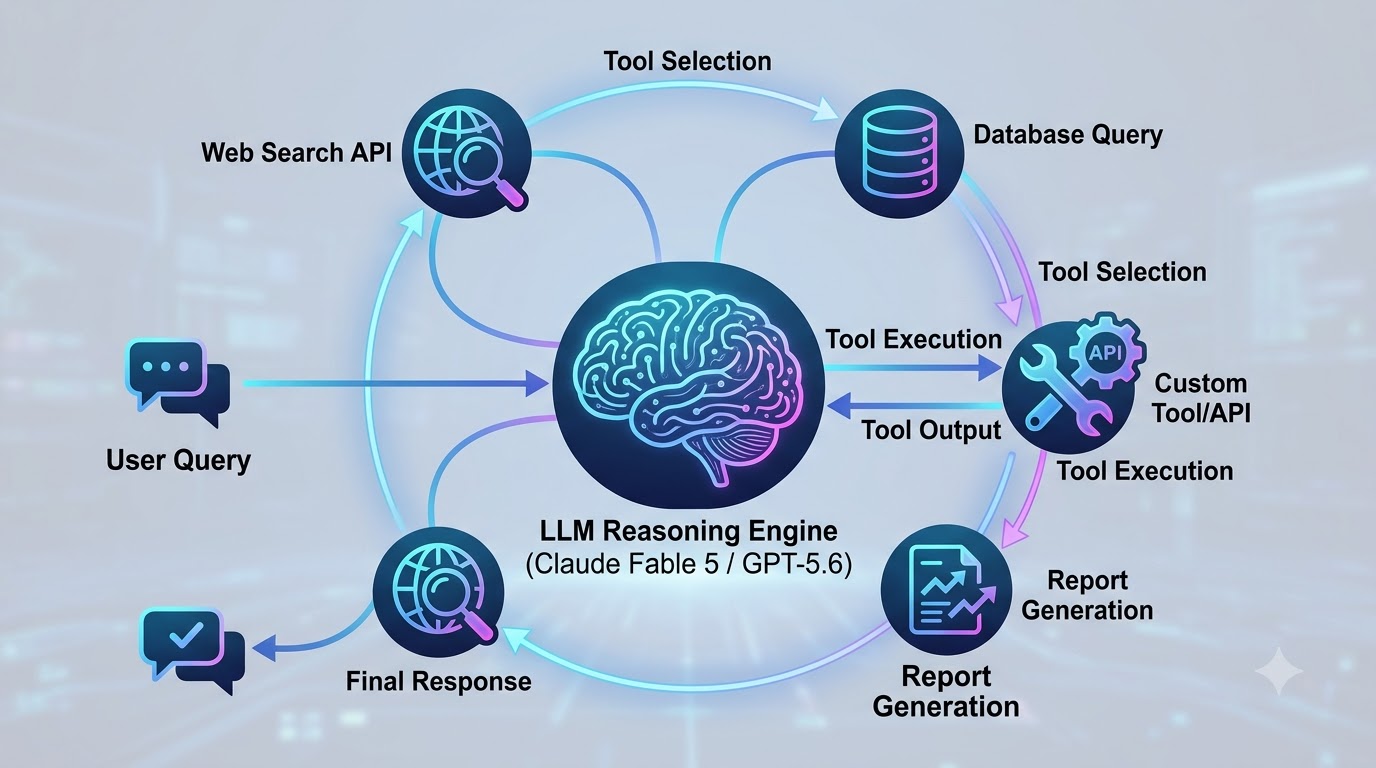
The shift from simple chatbots to sophisticated AI agents is a defining trend of 2026. Both Claude and GPT models are now serving as the intelligent reasoning engines for agents that interact with a myriad of external tools, APIs, databases, and services. These agents can autonomously plan, execute, and monitor complex workflows, revolutionizing automation.
Anthropic has strategically positioned Claude Fable 5 and Opus 5 as prime candidates for complex coding and long-running agentic AI. Their emphasis on robust reasoning, safety, and extended context windows makes them particularly suitable for tasks requiring sustained interaction and decision-making. OpenAI's GPT-5.6 also offers strong agentic capabilities, especially with its advanced function calling features.
For tool-heavy workflows, where an agent needs to make multiple API calls, process responses, and adapt its plan, Claude's ability to maintain a consistent 'persona' and follow complex instructions over many turns often leads to more reliable outcomes. GPT-5.6 excels in rapid prototyping of agents and integrating with a wide array of existing developer tools.
Here's a simplified Python example demonstrating how an LLM could act as an agent's brain, planning steps based on available tools. This illustrates the core concept of an agentic workflow.
import json

# Define available tools as functions
def search_web(query: str) -> str:
    """Searches the web for a given query and returns results."""
    print(f"Executing tool: search_web with query='{query'")
    # In a real scenario, this would call a search API
    if "weather" in query.lower():
        return "Current weather in London: 15°C, partly cloudy."
    return f"Search results for '{query': [Link1, Link2]"

def write_report(content: str) -> str:
    """Writes a report with the given content."""
    print(f"Executing tool: write_report with content='{content[:50]...' ")
    # In a real scenario, this would save to a file or database
    return "Report successfully written."

# Simulate an LLM's response for tool calling
def mock_llm_agent_response(user_query: str) -> dict:
    # This function simulates the LLM deciding which tool to use
    # In reality, the LLM would generate JSON based on its understanding
    if "weather" in user_query.lower():
        return {
            "toolₙame": "search_web",
            "parameters": {"query": "current weather in London"

    elif "report" in user_query.lower():
        return {
            "toolₙame": "write_report",
            "parameters": {"content": "Draft report based on web search findings."

    else:
        return {
            "toolₙame": "search_web",
            "parameters": {"query": user_query


# Agent orchestration logic
def run_agent_workflow(query: str):
    print(f"Agent received query: '{query'")
    # LLM decides which tool to use
    llm_decision = mock_llm_agent_response(query)
    toolₙame = llm_decision.get("toolₙame")
    tool_params = llm_decision.get("parameters", {)

    if toolₙame == "search_web":
        result = search_web(tool_params["query"])
        print(f"Tool output: {result")
        # Agent might then use this result to call another tool or respond
    elif toolₙame == "write_report":
        result = write_report(tool_params["content"])
        print(f"Tool output: {result")
    else:
        print("Agent could not determine a suitable tool.")

# Run the workflow
if _ₙame__ == "__main__":
    print("\n--- Workflow 1: Get Weather ---")
    run_agent_workflow("What's the weather like in London?")

    print("\n--- Workflow 2: Write a Report ---")
    run_agent_workflow("Please write a report about recent AI advancements.")

    print("\n--- Workflow 3: General Search ---")
    run_agent_workflow("Latest news on quantum computing.")
This example shows how an LLM's output (simulated by mock_llm_agent_response) can drive an agent's actions. Both Claude and GPT models are highly adept at generating the structured outputs needed for such tool orchestration. The choice often comes down to the complexity and length of the agent's tasks, where Claude's extended context and reasoning shine for more involved scenarios.
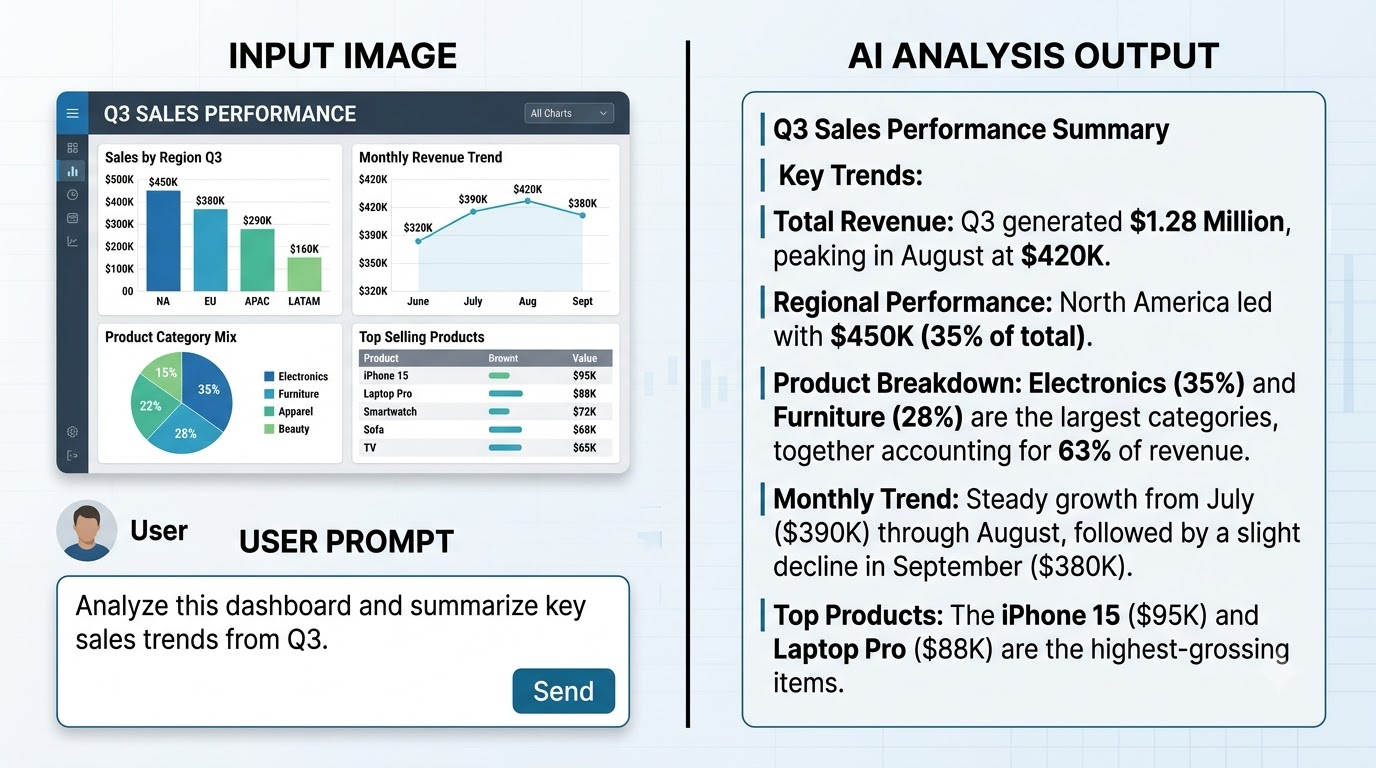
The ability to process and understand visual inputs has become a cornerstone of advanced AI. In 2026, both Claude Fable 5 and GPT-5.6 exhibit sophisticated multimodal capabilities, handling images, screenshots, scanned documents, and charts with remarkable proficiency. This opens up a vast array of applications that were previously challenging for text-only models.
Applications benefiting significantly from strong vision capabilities include automated document analysis, where models can extract information from invoices or legal contracts. UI understanding, for generating code from design mockups or automating accessibility checks, also relies heavily on visual reasoning. Both models can describe images, answer questions about their content, and even identify objects within complex scenes.
Claude Fable 5 often demonstrates a nuanced understanding of visual context, particularly with dense information in charts or complex diagrams. It can interpret trends and relationships within visual data with high accuracy. GPT-5.6 provides a broader range of visual reasoning tasks, including identifying subtle visual cues and generating creative descriptions based on image content.
From a developer's perspective, the choice between Claude and GPT extends beyond raw intelligence to practical considerations like API accessibility, pricing, and overall user experience. In 2026, both companies offer robust APIs, but their nuances cater to different types of workloads and budgets. Understanding these differences is key to optimizing your AI integration.
API pricing structures vary, with models often priced per token for both input and output. Claude Fable 5 and Opus 5, while highly capable, tend to be positioned at a premium for their advanced reasoning and large context windows. OpenAI's GPT-5.6 series offers a range of models, providing more granular options for different performance and cost requirements, from high-end to more economical choices.
Response speed and latency are critical for real-time applications. Both providers have made significant strides in optimizing model speed, but specific workloads might favor one over the other. For instance, high-throughput, low-latency applications might find GPT-5.6's optimized smaller models more suitable, while long-context, complex reasoning tasks might benefit from Claude's architecture, even if individual token generation is slightly slower.
| Metric | Anthropic Claude Fable 5 / Opus 5 | OpenAI GPT-5.6 Series |
|---|---|---|
| API Pricing | Premium for high-end models, competitive for Sonnet 5 | Tiered pricing, competitive across various model sizes |
| Response Speed | Excellent for long contexts, optimized for throughput | Very fast for general tasks, optimized for low latency |
| Context Window | Up to 1M+ tokens, ideal for extensive documents | Up to 500K+ tokens, strong for most applications |
| SDKs & Libraries | Official Python/TypeScript SDKs, growing community support | Official Python/Node.js SDKs, extensive community support |
| Rate Limits | Configurable tiers, enterprise-friendly limits | Standard tiers, scalable for enterprise needs |
| Ease of Integration | Straightforward API, clear documentation | Well-documented API, large developer ecosystem |
Both companies provide comprehensive SDKs and clear API documentation, making integration relatively smooth. OpenAI benefits from a larger, more established developer community, leading to more third-party tools and examples. Anthropic is rapidly catching up, with a strong focus on enterprise-grade support and developer resources for their specific use cases.
For large organizations, adopting AI models involves more than just performance; it's about security, seamless integration, and unwavering reliability. In 2026, both Anthropic and OpenAI have made significant strides in tailoring their offerings for enterprise clients, addressing critical concerns around data handling, privacy, and compliance.
Anthropic has aggressively pushed Claude into enterprise and coding workflows, emphasizing its 'Constitutional AI' approach for safety and alignment. This resonates well with companies prioritizing ethical AI and robust governance. Their data handling policies often include strong commitments to not using customer data for model training without explicit consent, a crucial factor for many businesses.
OpenAI also offers enterprise-grade solutions with advanced security features, including data encryption, access controls, and compliance certifications. Their existing integrations with major cloud providers and enterprise software ecosystems provide a significant advantage for companies already invested in those platforms. Both companies offer dedicated support and service level agreements (SLAs) for enterprise customers.
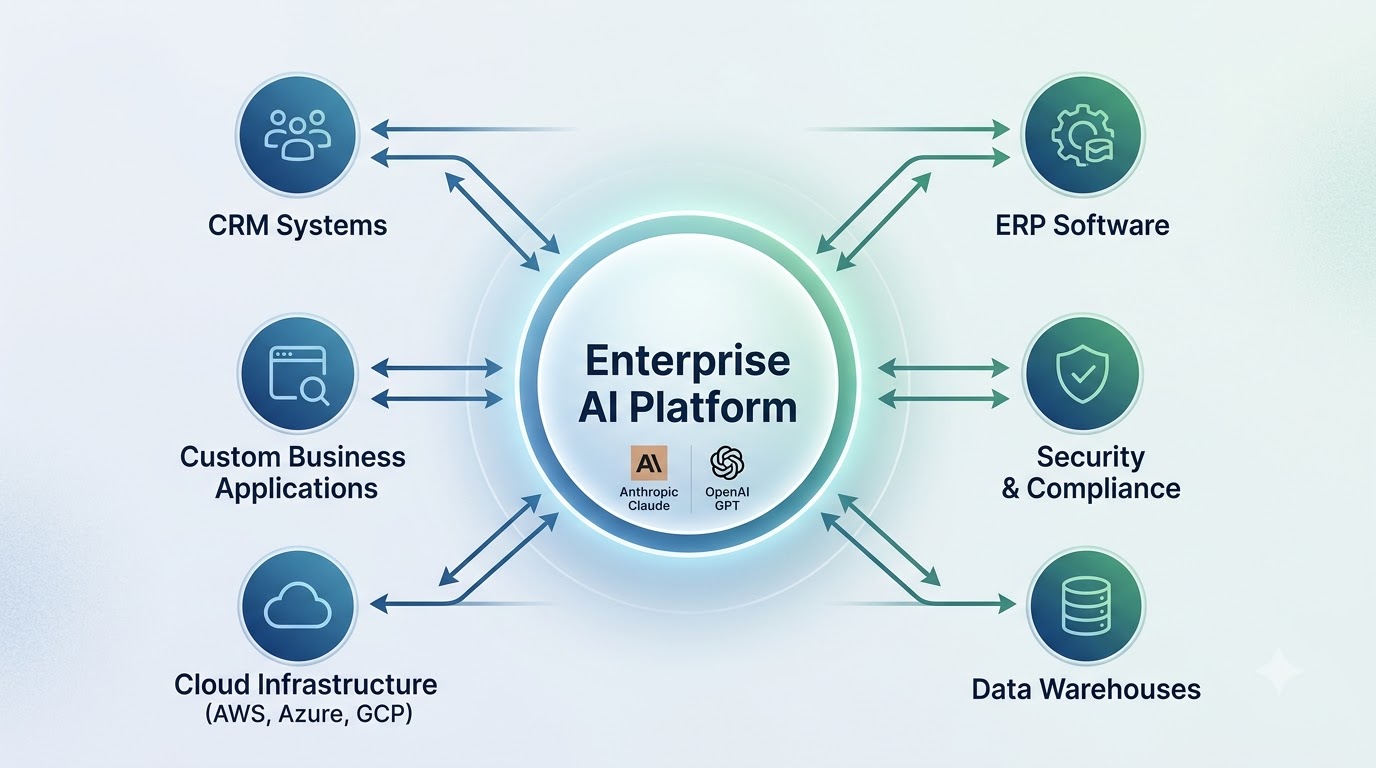
Reliability and uptime are paramount for business-critical applications. Both providers invest heavily in infrastructure to ensure high availability and consistent performance. The choice for enterprises often comes down to specific compliance needs, existing technology stacks, and the perceived alignment with each company's AI safety and development philosophy.
Instead of declaring a single winner, the optimal choice between Claude and GPT in 2026 depends entirely on your specific use case and priorities. Both models are incredibly powerful, but their strengths are often complementary. Here are tailored recommendations for various user profiles and scenarios.
Developers and programmers focused on complex, long-context codebases or intricate refactoring tasks might lean towards Claude Fable 5. Researchers needing deep synthesis of extensive documents will also find Claude's context window invaluable. For rapid prototyping, diverse coding tasks, and broad general intelligence, GPT-5.6 remains a strong contender.
| User Profile / Use Case | Recommended Model | Key Strengths |
|---|---|---|
| Developers / Programmers (Complex Code) | Anthropic Claude Fable 5 | Large context, robust reasoning, multi-file understanding |
| Developers / Programmers (General, Prototyping) | OpenAI GPT-5.6 | Versatile, idiomatic code, broad tool integration |
| Researchers / Analysts (Long Documents) | Anthropic Claude Fable 5 | Exceptional context window, deep synthesis capabilities |
| AI-Agent Builders (Long-running, Tool-heavy) | Anthropic Claude Opus 5 / Fable 5 | Superior agentic reasoning, consistent persona, safety focus |
| AI-Agent Builders (Rapid Iteration, Diverse Tools) | OpenAI GPT-5.6 | Strong function calling, broad API ecosystem |
| Businesses (High Security, Ethical AI) | Anthropic Claude Fable 5 | Constitutional AI, strong data governance, enterprise focus |
| Businesses (Broad Integration, Established Ecosystem) | OpenAI GPT-5.6 | Extensive integrations, mature enterprise offerings |
| Students / Everyday Users | Both (Sonnet 5 / GPT-5.6 smaller models) | Accessible, good general knowledge, cost-effective options |
In 2026, the AI race between Anthropic and OpenAI is not a simple sprint but a multi-faceted marathon. While both companies are pushing the boundaries across the board, distinct areas of leadership have emerged. This dynamic landscape means that leadership can shift rapidly with each new model release and strategic partnership.
Anthropic, with Claude Fable 5 and Opus 5, holds a notable lead in areas requiring extremely long context windows and robust, safety-aligned reasoning for complex, multi-step agentic workflows. Their focus on enterprise adoption and ethical AI also gives them an edge in specific business sectors. OpenAI's GPT-5.6 series maintains a strong lead in broad general intelligence, rapid innovation, and a vast, mature developer ecosystem.
For multimodal capabilities, both are highly competitive, with subtle differences in their strengths for specific visual tasks. In terms of developer experience, OpenAI's established community provides a slight advantage, while Anthropic is rapidly building out its support. The competition ultimately benefits users, driving both companies to deliver increasingly powerful and specialized AI solutions.
The 2026 AI race between Anthropic Claude and OpenAI GPT showcases two titans pushing the frontiers of generative AI. Our comparison highlights that while both models are incredibly capable, their distinct architectures and strategic focuses lead to different strengths. The true competition has evolved beyond raw chatbot intelligence.
It is increasingly about sophisticated coding agents, autonomous workflows, deep enterprise adoption, and overall efficiency in real-world AI applications. Relying solely on benchmark scores can be misleading; practical utility and alignment with specific project requirements are paramount. The best model is the one that most effectively addresses your unique challenges and integrates seamlessly into your ecosystem.
As AI continues to advance at an astonishing pace, users are encouraged to experiment, evaluate, and select the model that best aligns with their specific workload and strategic objectives. The future of AI is not about a single winner, but about diverse, powerful tools empowering innovation across every industry.
Deploying advanced AI in critical applications demands careful ethical consideration. Key concerns include ensuring fairness, preventing bias, maintaining transparency in decision-making, and establishing clear accountability for AI-driven outcomes. Developers must also address potential misuse, data privacy, and the societal impact of highly autonomous systems.
Context window limitations directly impact an AI agent's ability to maintain a coherent understanding over extended interactions or complex tasks. Agents must employ strategies like summarization, memory management, or retrieval-augmented generation (RAG) to keep relevant information within the active context. This adds complexity to agent design, requiring careful state management and prompt engineering to avoid 'forgetting' crucial details.
By 2027, we anticipate significant advancements beyond current coding and reasoning capabilities. This includes more sophisticated emotional intelligence for human-computer interaction, enhanced real-time learning from user feedback, and deeper integration with robotics for physical world interaction. We also expect more robust self-correction mechanisms and advanced synthetic data generation for training other AI systems.
Anthropic emphasizes 'Constitutional AI,' training models to adhere to a set of principles derived from human values, aiming for inherent safety and helpfulness. OpenAI, while also prioritizing safety, focuses on a broader range of alignment research, including reinforcement learning from human feedback (RLHF) and red-teaming. Both aim for beneficial AI, but their methodological emphasis differs, with Anthropic often highlighting its safety-first, 'responsible AI' approach more explicitly.
Harness Claude AI agents to create intelligent, autonomous workflows. Discover how to design, deploy, and adapt AI systems for powerful real-world automation
Discover how to earn $1000 monthly leveraging Claude Co-work. This guide shows normal people how to start a profitable content creation business step-by-step
Find the top AI transcription APIs for Indian languages like Hindi, Gujarati, and Tamil. We compare accuracy, speed, features, and pricing to guide your choice