>_Programming Partner
Loading technical insights...
Loading technical insights...
Software Developer
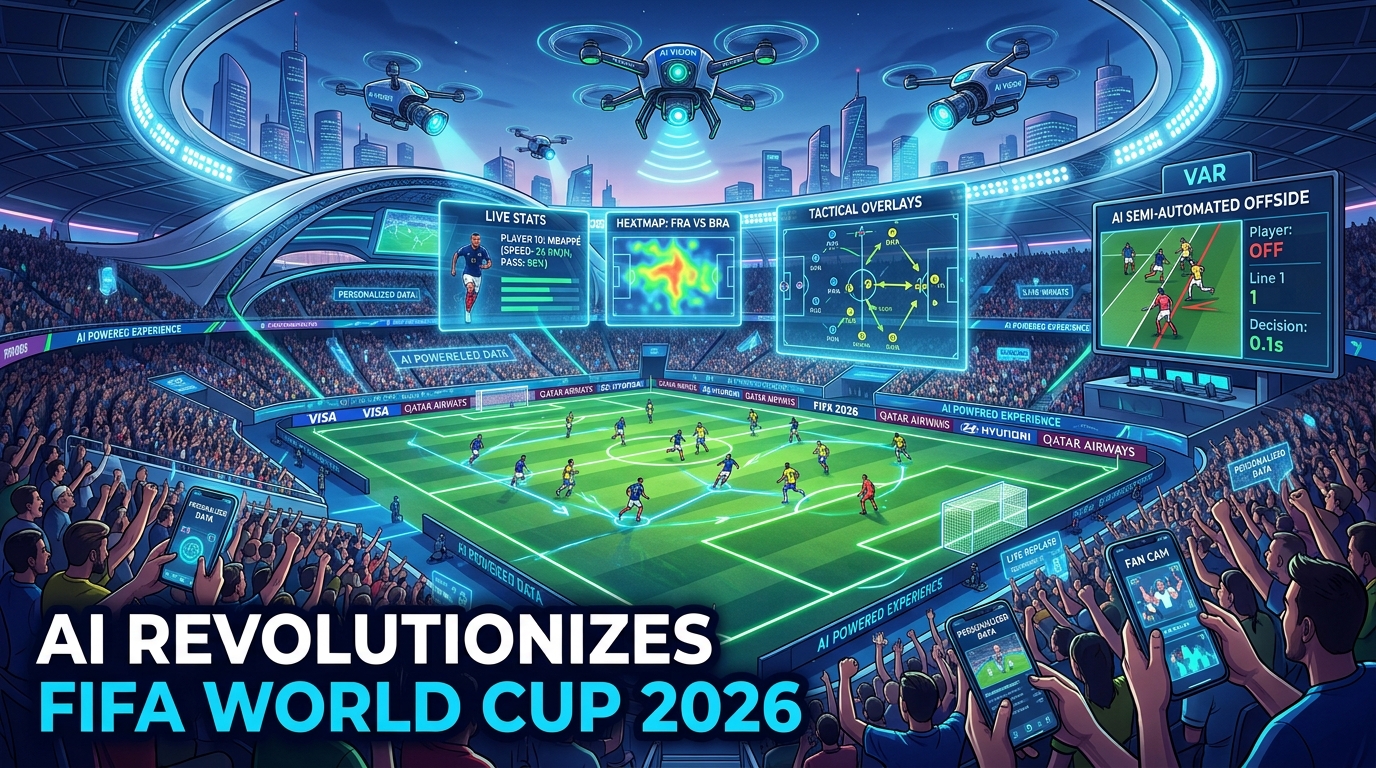
Artificial Intelligence (AI) is rapidly transforming the world of football, and the FIFA World Cup 2026 will showcase its profound impact. From analyzing player performance to enhancing refereeing decisions, AI is becoming an indispensable tool. This technology is reshaping how we experience the beautiful game, both on and off the pitch.
FIFA's adoption of AI stems from a commitment to elevate the sport's quality and fairness. It aims to improve match integrity, enhance decision-making accuracy, and significantly boost fan engagement. AI also plays a crucial role in optimizing tournament operations, ensuring a smoother and more exciting event for everyone involved.
AI systems meticulously track every player's movement on the field, capturing data points like speed, distance covered, and sprint intensity. This granular data helps coaches and analysts gain deep insights into individual and team performance. Heatmaps visualize player activity zones, while passing networks reveal tactical patterns.
Coaches use this information to refine strategies, identify strengths, and pinpoint areas for improvement. Broadcasters also leverage these analytics to provide viewers with real-time statistics and engaging visual overlays. FIFA's 'Football AI Pro' platform offers teams advanced tools for this data-driven analysis.
import pandas as pd
import numpy as np
from scipy.ndimage import gaussian_filter

# --- Simulate raw player tracking data ---
# In a real scenario, this data would come from optical tracking systems.
# Each row represents a player's position at a specific timestamp.
player_data = pd.DataFrame({
    'timestamp': np.repeat(np.arange(0, 60, 0.5), 22), # 60 seconds, 22 players
    'playerᵢd': np.tile(np.arange(1, 23), 120),
    'x_coord': np.random.uniform(0, 100, 22 * 120), # Field width (example: 0-100)
    'y_coord': np.random.uniform(0, 70, 22 * 120)  # Field length (example: 0-70)
)

# --- Function to calculate total distance covered by a player ---
def calculate_distance_covered(df, playerᵢd):
    player_df = df[df['playerᵢd'] == playerᵢd].sort_values('timestamp')
    if len(player_df) < 2:
        return 0.0

    # Calculate Euclidean distance between consecutive points
    distances = np.sqrt(
        (player_df['x_coord'].diff())**2 +
        (player_df['y_coord'].diff())**2
    )
    return distances.sum()

# --- Function to generate a conceptual heatmap grid ---
def generate_heatmap(df, playerᵢd, grid_size=(10, 7)):
    player_df = df[df['playerᵢd'] == playerᵢd]

    # Define field dimensions (example: 100x70 units)
    field_width = 100
    field_length = 70

    # Create a 2D histogram (grid) of player positions
    heatmap, xedges, yedges = np.histogram2d(
        player_df['x_coord'],
        player_df['y_coord'],
        bins=grid_size,
        range=[[0, field_width], [0, field_length]]
    )

    # Apply a Gaussian filter for smoothing the heatmap
    smoothed_heatmap = gaussian_filter(heatmap.T, sigma=1)
    return smoothed_heatmap

# --- Example Usage ---
# Calculate distance for player 7
player₇_distance = calculate_distance_covered(player_data, 7)
print(f"Player 7 total distance covered: {player₇_distance:.2f units")

# Generate heatmap for player 10
player₁0_heatmap = generate_heatmap(player_data, 10)
print("Heatmap for Player 10 (smoothed activity grid):")
# For visualization, you would typically plot this using matplotlib or similar.
# print(player₁0_heatmap) # Uncomment to see the raw heatmap arrayComputer vision is the core technology enabling much of modern football analytics. It uses multiple high-resolution stadium cameras to detect players, track the ball, and estimate player poses in real-time. Deep learning models analyze these visual streams to understand complex on-field actions.
This technology allows for precise tactical analysis, identifying formations, pressing intensity, and defensive lines. AI-enabled 3D player avatars are also generated, providing broadcasters with dynamic visual explanations of plays and tactical movements. This enhances viewer comprehension and engagement.
Machine learning algorithms analyze vast amounts of historical match data, team statistics, and individual player performance metrics. This analysis helps predict potential match outcomes and identify key tactical trends. Coaches leverage these insights to fine-tune their game plans and make data-driven decisions.
AI also significantly supports referees in ensuring fair play. Semi-automated offside technology (SAOT) uses limb-tracking data to provide rapid and accurate offside decisions. The connected match ball, like the TRIONDA, contains sensors that detect precise kick points, aiding in penalty and handball calls.
Video analysis, powered by computer vision, provides officials with comprehensive replays and angles for critical incidents. This combination of technologies drastically improves the accuracy and speed of decision-making, reducing human error in high-stakes moments.
| Feature | Traditional VAR | Semi-Automated Offside Technology (SAOT) |
|---|---|---|
| Decision Speed | Slower, requires extensive manual review | Faster, near real-time offside alerts |
| Accuracy | High, but subject to human interpretation | Very high, precise limb-tracking data |
| Human Involvement | High, human linesman and VAR operator make final call | Moderate, AI provides data, human VAR confirms |
| Technology Used | Video replays, human review | Limb-tracking cameras, connected ball, AI algorithms |
| Controversy Potential | Higher, due to subjective interpretation | Lower, due to objective data points |
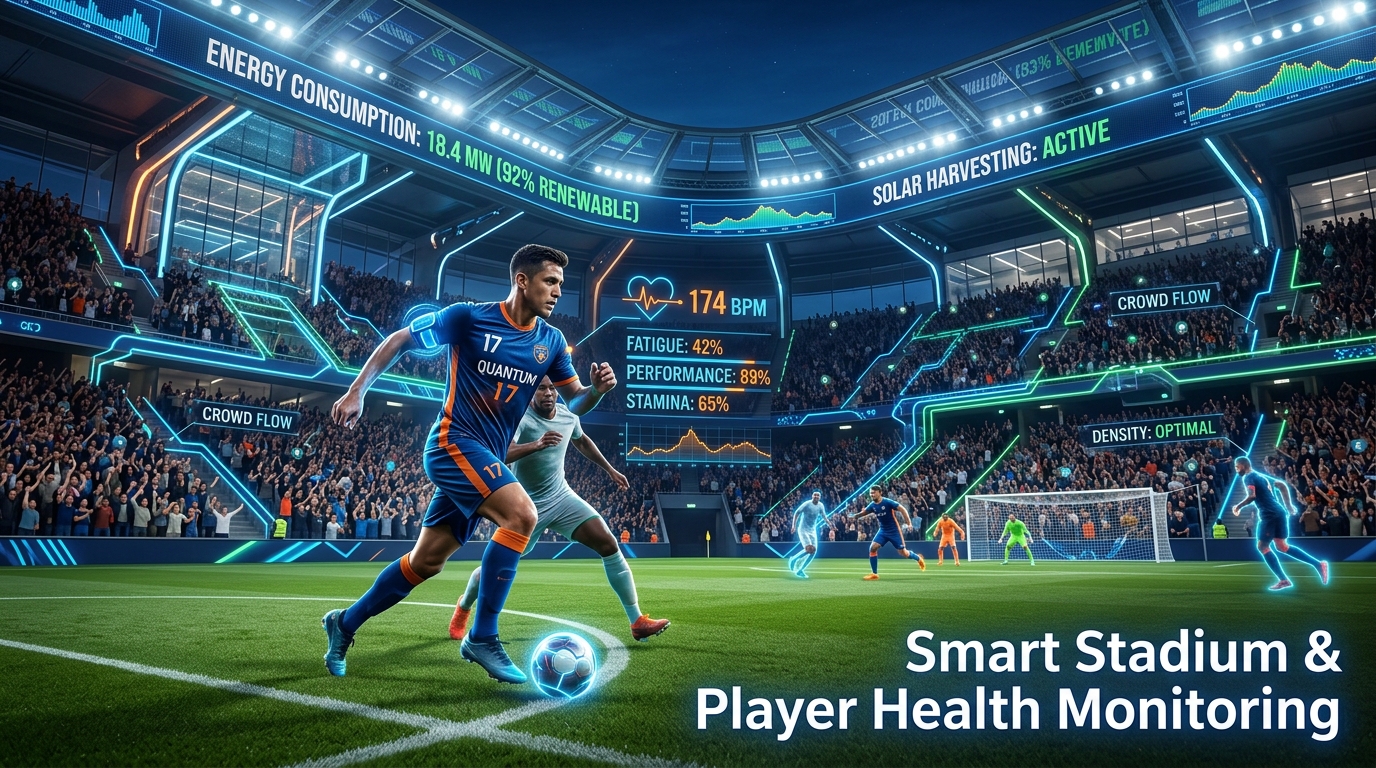
Wearable sensors, integrated into player kits, continuously monitor vital health metrics during training and matches. AI models analyze this data to track player workload, fatigue levels, and recovery status. This proactive approach helps medical teams prevent injuries and optimize training regimens.
These systems can identify early signs of overtraining or potential injury risks, allowing for timely interventions. This ensures players are in peak physical condition throughout the demanding tournament. Informed decisions about player fitness are crucial for team success.
Beyond the field, AI transforms stadium operations into a seamless experience. Crowd management systems use computer vision to monitor crowd density and flow, preventing bottlenecks and ensuring safety. Security monitoring is enhanced with AI-powered anomaly detection, identifying unusual behavior.
Smart entry systems, sometimes incorporating facial recognition where legally permitted, expedite fan access. AI also optimizes energy consumption within stadiums, managing lighting, HVAC, and other utilities efficiently. In emergencies, AI-driven systems can guide response teams and facilitate evacuations effectively.
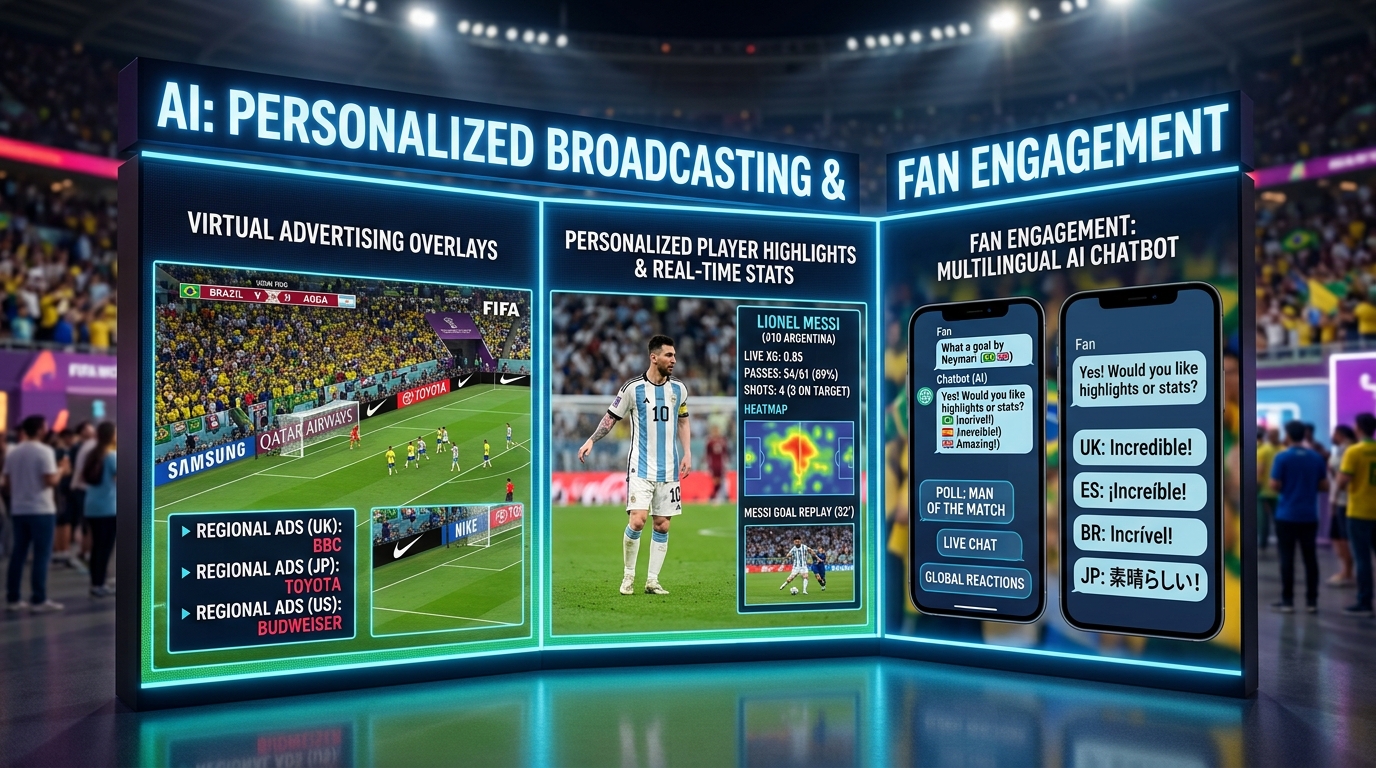
AI is a game-changer for football broadcasting, offering dynamic and personalized viewing experiences. It assists broadcasters with automatic camera selection, ensuring the best angle is always shown. Instant replay generation and real-time statistics are also automated, providing immediate insights.
AI algorithms can automatically create match highlights, identifying key moments and exciting plays. Multilingual commentary support, powered by AI translation, makes matches accessible to a global audience. This technology delivers a truly immersive and customized viewing journey for every fan.
Virtual advertising technology leverages AI, computer vision, and camera tracking to revolutionize how ads are displayed. During live matches, digital billboards can show different advertisements to viewers in various countries simultaneously. This real-time graphics rendering allows for highly targeted and localized marketing campaigns.
AI also personalizes the fan journey through customized highlights and live statistics delivered directly to their devices. Chatbots provide instant answers to fan queries, while fantasy football insights are enhanced with predictive analytics. Multilingual translations and recommendation systems further enrich the overall fan experience.
Generative AI is transforming how football content is created, offering new avenues for fan engagement. It can automatically produce concise match summaries, capturing key events and outcomes. This speeds up content delivery after games.
AI also generates compelling social media content, player insights, and multilingual articles, reaching diverse audiences efficiently. Highlight descriptions and interactive fan experiences are further enhanced. This ensures a constant stream of fresh and relevant content for supporters worldwide.
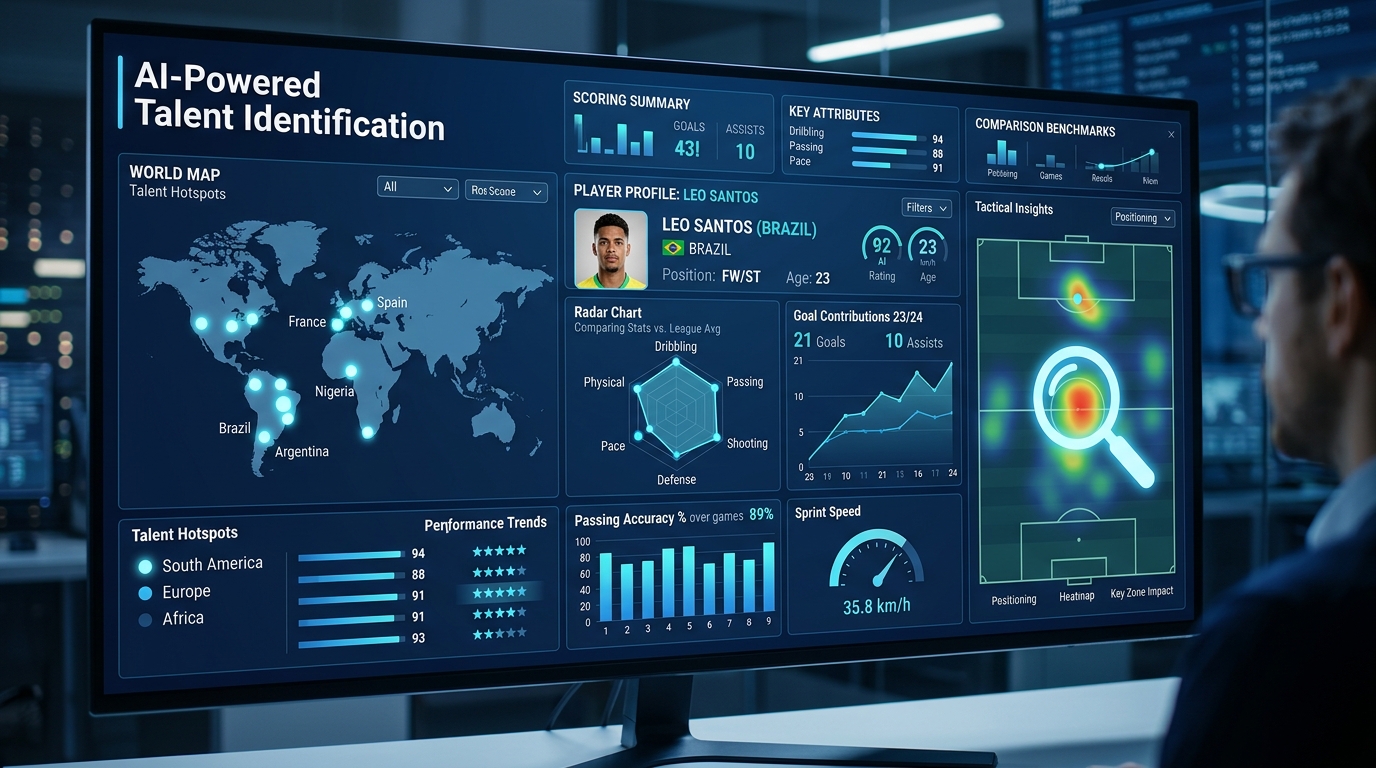
Clubs and national teams are increasingly turning to AI to revolutionize their scouting and recruitment processes. AI systems analyze vast datasets of player performance metrics, physical attributes, and tactical contributions. This helps evaluate player potential objectively.
These systems can identify emerging talent from obscure leagues or youth academies that might otherwise be overlooked by human scouts. By comparing performance metrics against established benchmarks, AI provides data-driven insights. This supports recruitment decisions, ensuring clubs invest in the right players.
AI considers factors like passing accuracy, defensive actions, offensive contributions, and even off-ball movement. It can predict how a player might adapt to a new league or team, offering a comprehensive profile. This analytical edge helps unearth future stars and build stronger squads.
Despite its immense potential, AI in football faces several challenges that require careful consideration. Data privacy is a significant concern, especially with the extensive collection of player and fan data. Ensuring secure storage and ethical usage is paramount.
Algorithm bias can lead to unfair or inaccurate decisions, particularly if training data is not diverse or representative. Transparency in AI decision-making is also crucial, as stakeholders need to understand how conclusions are reached. High implementation costs can be a barrier for smaller organizations.
Maintaining human oversight in critical decision-making processes, such as refereeing, remains essential. AI should augment, not replace, human judgment, especially in nuanced situations. Best practices include rigorous testing, continuous monitoring, and clear ethical guidelines for deployment.
The future of AI in the FIFA World Cup promises even more groundbreaking innovations. We can anticipate advanced AI tactical assistants that offer real-time strategic recommendations to coaches during matches. Autonomous camera systems will provide unparalleled coverage and dynamic angles.
Digital twins of players and stadiums will enable highly accurate simulations for training, strategy, and facility management. Predictive analytics will become even more sophisticated, forecasting player performance, injury risks, and even crowd behavior with greater precision. Next-generation smart stadium technologies will create fully immersive and interactive environments.
Advanced computer vision will unlock new levels of detail in game analysis, identifying subtle movements and patterns previously undetectable. These advancements will further reshape the FIFA World Cup experience, making it more engaging, fair, and operationally efficient for everyone involved.
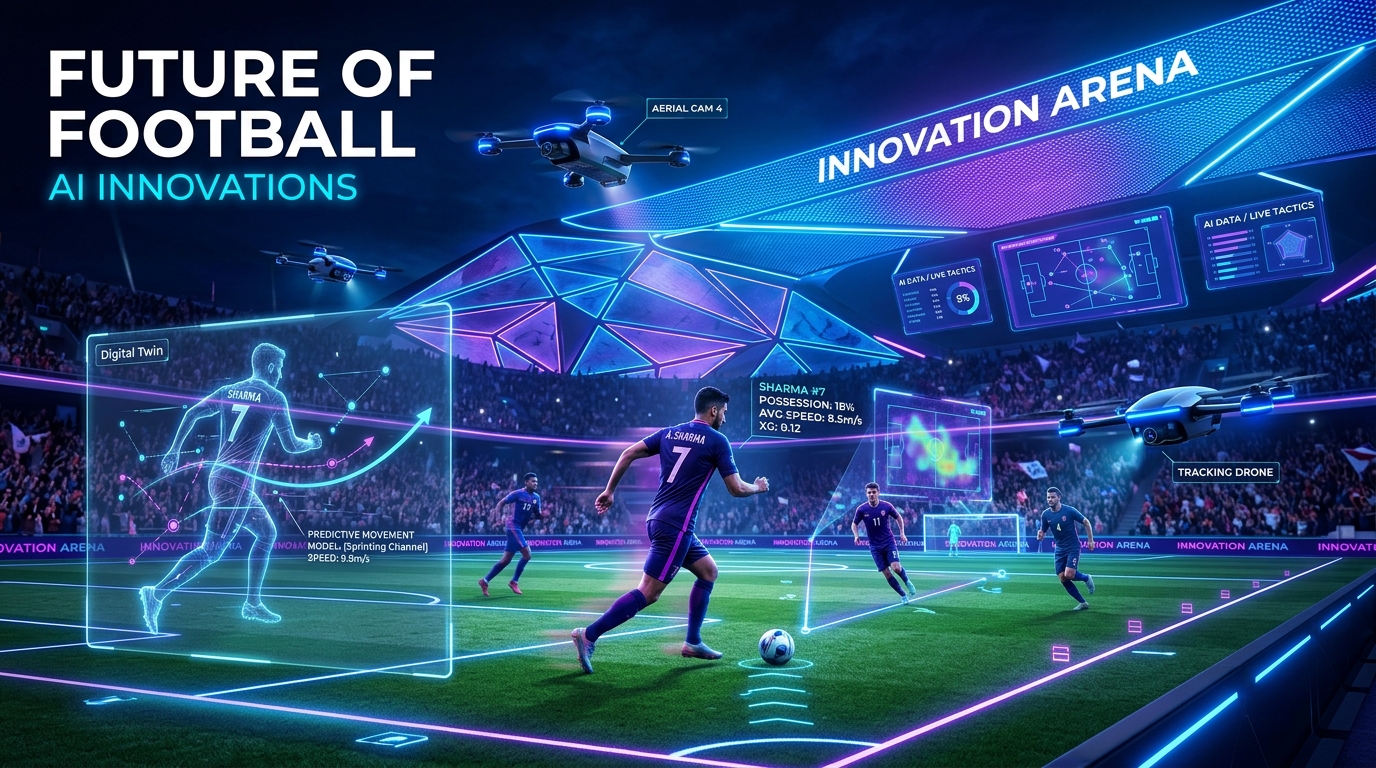
Artificial Intelligence is undeniably reshaping every facet of the FIFA World Cup-from the intricate details of on-field analytics to the critical decisions of officiating. It is transforming how matches are broadcast, how stadiums are managed, and how fans engage with the sport. AI's influence is pervasive and ever-growing.
The integration of AI ensures a more data-driven, fair, and captivating experience for players, officials, and supporters alike. As technology continues to advance, AI's role in global sports, particularly in football, will only expand. It promises to keep evolving the beautiful game in exciting and unforeseen ways.
AI analyzes a player's historical performance, training load, and recovery data from wearable sensors. It can identify patterns indicating fatigue or overtraining, allowing coaches to adjust training schedules and rest periods. This proactive approach minimizes the risk of burnout and ensures players remain in optimal condition throughout the demanding tournament schedule.
Yes, AI can create highly personalized training regimens. By analyzing a player's strengths, weaknesses, and tactical role, AI algorithms can suggest specific drills to improve areas like passing accuracy, defensive positioning, or shot power. This tailored approach maximizes individual player development and overall team performance.
Beyond individual player stats, AI in post-match analysis can identify complex tactical patterns, such as opponent pressing schemes or defensive vulnerabilities. It can also analyze set-piece effectiveness and predict how different strategies might fare against future opponents. This provides coaches with deeper, actionable insights for upcoming matches.
AI plays a significant role in optimizing energy consumption within smart stadiums by managing lighting, HVAC, and waste systems efficiently. It can also optimize logistics for transportation and resource allocation, reducing the tournament's carbon footprint. This contributes to making the World Cup a more environmentally friendly event.
Harness Claude AI agents to create intelligent, autonomous workflows. Discover how to design, deploy, and adapt AI systems for powerful real-world automation
Discover how to earn $1000 monthly leveraging Claude Co-work. This guide shows normal people how to start a profitable content creation business step-by-step
Find the top AI transcription APIs for Indian languages like Hindi, Gujarati, and Tamil. We compare accuracy, speed, features, and pricing to guide your choice